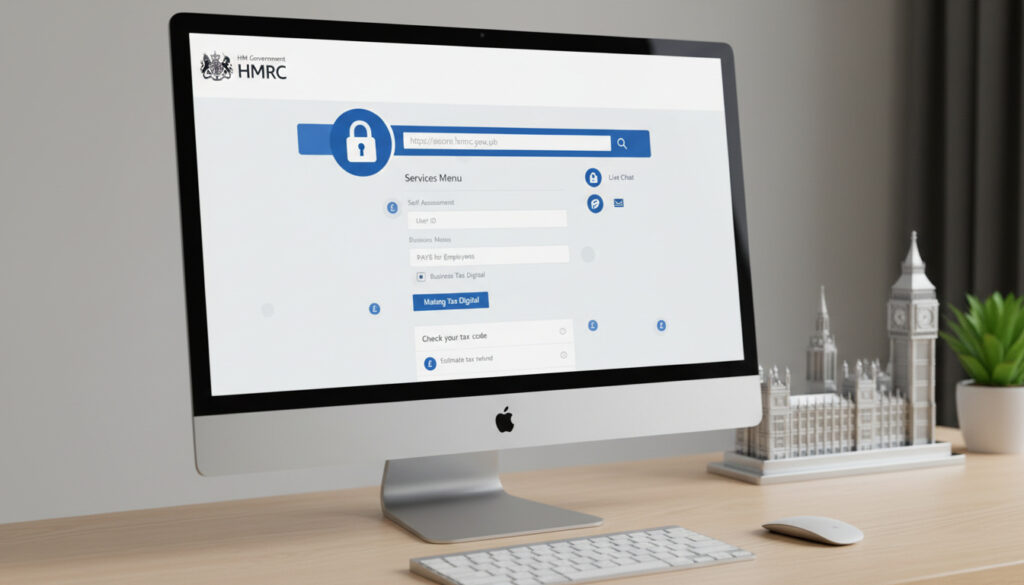
HM Revenue & Customs – Guide to Services, Contacts and Login
Her Majesty’s Revenue and Customs, universally known as HMRC, operates as the United Kingdom’s central authority for tax collection, customs enforcement, and benefit administration. Formed in April 2005 through the consolidation of two historic departments, the organization functions as a non-ministerial government department headquartered at 100 Parliament Street in Whitehall, London.
The department manages the entire lifecycle of UK taxation, encompassing income tax, corporation tax, value-added tax, and excise duties. It also administers critical welfare mechanisms including tax credits and child benefits, establishing itself as an unavoidable touchpoint for millions of British citizens and businesses throughout their financial lives.
What is HM Revenue & Customs (HMRC)?
Her Majesty’s Revenue and Customs
HMRC
18 April 2005
100 Parliament Street, London SW1A 2BQ
- Unified tax authority created from the merger of Inland Revenue and HM Customs & Excise
- Non-ministerial department operating under Treasury policy direction
- Achieved approximately £300 million in annual operational savings following restructuring
- Originally employed roughly 91,000 staff, reduced by 12,500 positions by 2008
- Transferred approximately 150 policy staff to HM Treasury in 2005
- Authorized new enforcement powers through Finance Acts 2007 and 2008
- Twentieth anniversary of formation marked in 2025
| Fact | Details |
|---|---|
| First Chairman | David Varney (appointed 9 May 2004) |
| Key Services | Tax collection, customs enforcement, benefits administration |
| Contact Methods | Telephone, online portals, postal correspondence |
| Headquarters | 100 Parliament Street, London SW1A 2BQ |
| Formation Date | 18 April 2005 |
| Predecessor Bodies | Inland Revenue and HM Customs & Excise |
| Workforce Reduction | Approximately 12,500 by 2008 (14% of original staff) |
| Operational Savings | £300 million annually (post-restructuring) |
What Does HMRC Do?
Tax Collection and Self Assessment
HMRC administers the self-assessment regime requiring millions of taxpayers to report income and calculate liabilities annually. Online filing deadlines typically fall on 31 January for the preceding tax year, with returns processed through secure Government Gateway portals.
VAT and Business Registration
Businesses exceeding the taxable turnover threshold must register for VAT through HMRC’s digital services. The department monitors compliance, processes quarterly or monthly returns, and manages the complex administration of Britain’s consumption tax regime.
Mandatory VAT registration applies once taxable turnover exceeds £90,000 in a rolling 12-month period. Registration must occur within 30 days of crossing this threshold, with accounts managed entirely through the GOV.UK portal.
Benefits and Customs Enforcement
Beyond taxation, HMRC administers tax credits and maintains customs controls at UK borders. Post-Brexit operations expanded these customs functions significantly, though specific 2026 operational details remain subject to ongoing policy adjustments.
How Do I Contact HM Revenue & Customs?
Telephone Support Lines
Specific helplines address distinct tax areas. General enquiries reach 0300 200 3300, operational Monday through Friday between 8am and 6pm. Self Assessment queries use 0300 200 3310, VAT matters 0300 200 3700, and Corporation Tax 0300 200 3410.
Phone lines operate Monday to Friday, 8am to 6pm. Current operating hours and menu options should be verified through official GOV.UK channels before calling, as schedules may vary seasonally.
Digital and Postal Channels
Secure online messaging and document submission occurs through Government Gateway accounts. Physical correspondence routes to 100 Parliament Street, London SW1A 2BQ, though regional offices handle localized enforcement matters.
How to Log In to HMRC Services?
Access requires a Government Gateway account, the central authentication system for UK government digital services. Users file self-assessment returns, manage VAT accounts, and review tax credits through this unified portal, typically requiring multi-factor authentication for security.
HMRC warns against sophisticated phishing attempts including fraudulent calls and emails demanding immediate payment. The department never requests personal banking details or passwords via unsolicited contact. Report suspicious communications through official GOV.UK channels immediately.
Digital service availability varies by tax type, with some functions requiring advance registration by post before online activation.
How Did HMRC Evolve Over Time?
- : Inland Revenue established as predecessor organization
- : Gus O’Donnell’s review recommends departmental merger to improve efficiency
- : Chancellor Gordon Brown announces merger in Budget statement
- : Name “HMRC” and first chairman David Varney publicly revealed
- : Staff begin relocating to 100 Parliament Street, Whitehall
- : HMRC officially forms, merging Inland Revenue and HM Customs & Excise
- : Finance Acts grant new penalty powers and inspection rights
- : Workforce reductions reach 12,500 (14% of original 91,000 staff)
- : Twentieth anniversary prompts institutional assessments of merger success
What Facts Are Established Versus Uncertain?
Established Information
- Formed 18 April 2005 via statutory merger
- Headquartered at 100 Parliament Street since November 2004
- David Varney served as first chairman
- Achieved £300 million annual operational savings
- Reduced workforce by 12,500 by 2008
- Distinct predecessor cultures: Revenue “retriever” versus Customs “terrier”
Information Requiring Verification
- Current total staffing levels (research specifies 2008 figures only)
- Exact annual revenue totals processed (specific current figures not cited)
- Post-2026 policy directions and organizational changes
- Real-time telephone menu options or specific departmental extensions
Why Does HMRC’s Unified Structure Matter?
The 2005 consolidation ended decades of separate administration for direct and indirect taxation. Previously, Inland Revenue handled income matters while Customs & Excise managed VAT and borders, creating inefficiencies and public confusion exemplified by the Mapeley Affair and tax credit rollout difficulties.
This structural unity allowed policy coordination to shift toward HM Treasury while HMRC focused on operational execution. For taxpayers, it created a single point of contact for most obligations, though integrating distinct organizational cultures—Revenue’s methodical “retriever” approach versus Customs’ aggressive “terrier” enforcement style—presented significant management challenges that persisted for years.
For individuals exploring alternative revenue streams, understanding tax obligations becomes crucial when building income portfolios through Ways to Make Money Online – Legitimate Methods for Beginners.
What Do Expert Assessments Reveal?
Twenty years after formation, assessments deem the merger a qualified success for achieving efficiencies and compliance improvements, though customer service capabilities lagged behind operational targets and management structures grew increasingly complex.
Essential Points About HMRC
HMRC operates as the United Kingdom’s unified tax authority, born from the 2005 merger of Inland Revenue and Customs & Excise. It manages self-assessment, VAT registration, and benefits administration from its Whitehall headquarters, offering telephone and digital contact options. While the restructuring delivered substantial savings and streamlined enforcement powers, current staffing levels and future digital transformation timelines remain subject to verification through official channels. Understanding these functions helps taxpayers navigate obligations effectively, whether managing investments through How to Invest Money – Step-by-Step for Beginners or handling routine filings.
Frequently Asked Questions
What does HMRC stand for?
HMRC stands for Her Majesty’s Revenue and Customs, the official name of the UK’s tax, customs, and benefits authority established in 2005.
How does HMRC differ from HM Treasury?
HMRC administers tax collection and benefits, while HM Treasury sets tax policy. Following the 2005 merger, approximately 150 policy staff transferred from HMRC to Treasury.
What was the Mapeley Affair?
The Mapeley Affair involved property leasing controversies that eroded public trust in predecessor departments, contributing to the political rationale for merging Inland Revenue and Customs & Excise in 2004.
When is the self-assessment deadline?
Online self-assessment returns for the preceding tax year must typically be submitted by 31 January, with payments due simultaneously.
Why did the merger cause 12,500 job losses?
The restructuring eliminated duplicate administrative functions between the merged departments, achieving £300 million annual savings but reducing total staff by 14%.
Are HMRC phone numbers free to call?
Numbers beginning 0300 cost the same as geographic 01 or 02 numbers from landlines and mobiles, with many phone packages including them in free minutes.
More related posts
 Timothy Olyphant Movies and TV Shows: Complete Guide
 Tiger Woods: Net Worth, Wife, Exemptions & Trump
 Thomas Brodie-Sangster: Age, Wife, Movies, and Relationship Truth
 Cole Hauser Lawsuit: Why Taylor Sheridan Is Suing
 Michael J. Fox Parkinson’s: Stage, Life Expectancy & Updates
 Pierre Moullier: Real Name, Age, Height, EastEnders Role
 Georgia Stanway: Age, Career, Stats, and Personal Life
 Gabe Newell: Net Worth, Biography, and Steam Lawsuit