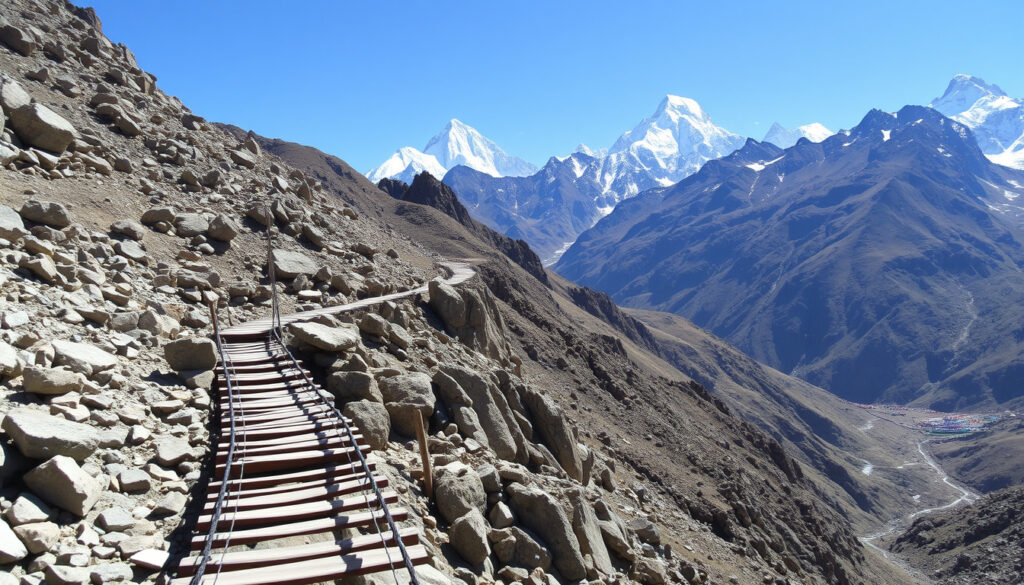
Everest Base Camp Trek: Cost, Difficulty & Safety Rules
You’ve seen the photos of tents against the Khumbu Icefall; trekking to Everest Base Camp is a bucket-list dream but demands serious preparation. This guide cuts through hearsay with data-backed facts on difficulty, cost, safety, and what happens above 5,000 meters.
Elevation of South Base Camp: 5,364 m (17,598 ft) · Elevation of North Base Camp: 5,150 m (16,900 ft) · Typical trek duration: 12–16 days · Round‑trip distance: 130 km (80 mi) · Annual trekkers (approx.): 30,000+
Quick snapshot
- South Base Camp elevation is 5,364 m (Nepal Intrepid Treks)
- Trek takes 12–14 days of walking (Nepal Intrepid Treks)
- No technical climbing required (Nepal Intrepid Treks)
- 2pm rule used by most guiding companies (View Nepal Treks)
- Exact number of bodies still on Everest: estimates 200–300
- Whether a dog has ever truly summited (unverified claims)
- Exact cost breakdown for independent trekkers varies widely
- Effectiveness of the 2pm rule in preventing all fatalities
- May 29, 1953 – First summit by Hillary and Tenzing Norgay (Wikipedia)
- April 18, 2014 – Avalanche kills 16 Sherpas on Khumbu Icefall (Wikipedia)
- April 25, 2015 – 7.8 quake triggers avalanche, 22 dead at Base Camp (Wikipedia)
- May 2019 – Record 11 deaths in one season, overcrowding factor (Nepal Times)
- 2026 permit system now includes digital Trek Card with QR code
- Nepal issued 479 climbing permits in 2023 – highest ever
- Safety regulation debate intensifies after record seasons
- More trekkers expected post-COVID, infrastructure improving
The numbers paint a clear picture of the trek’s demands.
| Parameter | Value |
|---|---|
| South Base Camp Elevation | 5,364 m (17,598 ft) |
| North Base Camp Elevation | 5,150 m (16,900 ft) |
| Trekking Distance (round trip) | 130 km (80 mi) |
| Averave T rek duration | 12–16 days |
| Estimated Cost (guided) | $1,000–$5,000 |
| Deadliest Year (2015 earthquake) | 22 fatalities |
| Permit Fee (Sagarmatha NP) | $30 per person |
How difficult is it to climb to Everest Base Camp?
The Everest Base Camp trek is often labelled “moderate to strenuous” – and that’s accurate. According to Nepal Intrepid Treks (experienced local opertor), the trek is tough precisely because of altitude, not because of technical climbing. You don’t need ropes, crampons, or prior mountaineering experience in spring or autumn under normal conditions. What you do need is cardiovascular fitness, strong legs, and a willingness to walk uphill for hours each day.
The route climbs from about 2,610 m at Lukla to 5,545 m at Kala Pathar (a view point above Base Camp). That’s nearly 3,000 m of vertical gain. Daily walking gains are typically 300–700 m, which is aggressive enough to make altitude a real concern.
In terms of hours, expect 5–7 hours of hiking per day, according to standard itineries outlined by Intrepid Travel (global adventure opertor). The total walking time over the 12–16 day trip adds up to roughly 60–90 hours of active trekking.
Can a beginner trek Everest Base Camp?
Yes – if you prepare properly. Nepal Intrepid Treks states that the trek does not require technical climbing skills. Many beginners complete it each season. The key is pre‑trek training: build up to walking 5–7 hours on consecutive days with a loaded daypack, include stair‑climbing or hill repeats, and strengthen your core and legs. Gradual ascent with built‑in acclimateisation days is non‑negotiable. Without it, the altitude will stop you cold.
How many hours of walking is Everest Base Camp?
Most 14‑day itineraries average 5 to 7 hours of walking daily, as detailed by Intrepid Travel. Some days are lighter (3–4 hours), others longer (8+ hours) when crossing high passes like Cho La or Renjo La. The round‑tri p distance of about 130 km is spread across roughly 10 walking days, with rest and acclimateisation days at Namche Bazaar and Dingboche.
Can anybody go to Everest Base Camp?
There’s no upper age limit, but most opertors set a minimum age of 12–16. Good aerobic endurance and no serious medical conditions (heart or lung issues) are prerequisities. You’ll need a Sagarmatha National Park entry permit (NPR 3,000) and a Khumbu Pasang Lhamu Rural Municipality permit (NPR 3,000) – together about USD 30. Guided groups are strongly recommended, though solo trekking is legally allowed with a TIMS card.
How much does it cost to climb to Everest Base Camp?
The price tag for a guided 14‑day package from Kathmandu typically ranges $1,200 to $2,500 per person, according to Getaway Nepal (local trekking agency). That includes flights to Lukla, lodging, meals, permits, and a guide. Independent trekkers can spend as little as $700–$1,000 excluding international flights, but that’s much harder to organise. Guide fees run around $25–$40 per day, as noted by Getaway Nepal. Don’t forget insurance – medical evacuation cover is essential above 4,000 m.
The catch: budget options require careful planning and self-sufficiency.
What is the 2pm rule on Everest?
The 2pm rule is a simple but life‑saving guideline: on summit day, if you haven’t reached the top by 2:00 p.m., you must turn around no matter how close you are. The reason is brutal – afternoon weather on Everest deteriorates fast, and descending in darkness or a storm multiplies the risk of death. While the rule is most famous on summit day, it also applies to high‑pass crossings on the Base Camp trek. View Nepal Treks notes that commercial expeditions enforce it strictly. The wisdom comes from fatal accidents caused by late descents – most notably the 1996 disaster when several climbers died after summiting well after 2 p.m.
What is the oldest body still on Everest?
The most famous body, known as “Green Boots,” is believed to be that of Tsewang Paljor, an Indian climber who died in 1996. He rested in a limestone cave near 8,500 m for decades. Others remain in the “Death Zone” – above 8,000 m – where recovery is nearly impossible. Estimates put the total number of bodies on Everest at 200–300, according to climber accounts. The exact count is unknown because many are buried in crevasses or under snow.
Has a dog ever been on Everest?
Dogs have made it to Base Camp – there are well‑known Base Camp dogs like “Summit” – but credible evidence of a dog summitting Mount Everest is thin. One unverified claim from 2013 says a stray dog named “Summit” followed a team to 8,000 m, but most mountaineers regard this as anecdotal. Wikipedia does not record any confirmed canine summit.
Has anyone ever spent a night on Everest?
Spending a night at the summit is extremely rare and dangerous. The most famous case is Lincoln Hall, who was left for dead in 2006 but survived a night above 8,600 m without oxygen – a near‑miraculous survival. However, he did not deliberately plan to overnight. A handful of climbers have been forced to bivouac near the summit due to exhaustion, often with fatal results. The official record of an intentional camp at the summit does not exist.
Can you see bodies while climbing Everest?
Yes, unfortunately. Along the most popular routes, especially in the “Death Zone” above 8,000 m, visible bodies are a grim reality. “Green Boots” was a landmark for years. Many remain in plain sight because moving them is too dangerous and costly. Wikipedia’s coverage of the 1996 disaster describes this gruesome landscape. On the Base Camp trek itself, you won’t see bodies – they are confined to the high mountain, but the ethical debate around their removal is ongoing.
Why can’t you climb Everest in July?
July falls right in the summer monsoon season (June–August). Heavy precipitation, cloud cover, and violent storms make the mountain extremely dangerous. Avalanche risk is at its peak, and visibility can drop to near zero. The climbing windows are narrow: the pre‑monsoon period (April–May) offers the most stable weather, while post‑monsoon (September–October) is a secondary window. Wikipedia’s climbing seasons page notes that May is the most popular month.
What was the most fatal year on Everest?
The answer depends on how you count. In terms of a single incident, 2015 stands out: a 7.8 magnitude earthquake triggered an avalanche that killed 22 people at Base Camp, making it the deadliest day. In terms of annual deaths during climbing season, 2014 saw 16 fatalities (including 16 Sherpas in the Khumbu Icefall avalanche). 2023 set a record for climbing permits (479), but fatalities were lower at 17. Wikipedia’s list of deaths on Everest provides year‑by‑year data.
Eight key specs, one pattern: everything hinges on altitude.
| Parameter | Detail |
|---|---|
| Starting elevation (Lukla) | 2,610 m |
| Highest point on trek (Kala Pathar) | 5,545 m |
| Base Camp elevation (South) | 5,364 m |
| Total vertical gain | approx. 2,935 m |
| Daily walking gain | 300–700 m |
| Oxygen at 3,500 m | ~60% of sea level |
| Saagarmatha NP permit (foreign) | NPR 3,000 (~$23) |
| Khumbu rural municipality permit | NPR 3,000 (~$23) |
| Guide cost per day | $25–$40 |
| Best weather window | April–May, October–November |
Upides
- No technical climbing – accessible to fit beginners
- Stuning Himalayan scenery, including Everest itself
- Teahouse infrastructure makes it relatively comfortable
- Moderate cost compared to other major treks
- Well‑established route with good support network
Downides
- Altitude is a real risk – acute mountain sickness can affect anyone
- Crowded during peak season (April–May)
- Long flight delays to/from Lukla common
- Basic accommodation – teahouses can be cold and noisy
- Insurance mandatory – helicopter evacuation is expensive
Step-by-step guide to planning your Everest Base Camp trek
- Choose your season: Pre‑monsoon (March–May) or post‑monsoon (October–November) are ideal. Avoid June–August (monsoon) and Decembe–February (extreme cold).
- Get fit: Train for 5–7 hours of consecutive hiking. Include hill repeats, stair‑climbing, and core work. Aim for a 10‑km hike with 800 m gain as a test.
- Obtain permites: Apply for Sagarmatha National Park entry (NPR 3,000) and Khumbu rural municipality permit (NPR 3,000). Your guide arranges these, but independent trekkers can get them at the park entrance.
- Pack gear: Key items: down jacket, sleeping bag rated to -15°C, trekking boots, water‑proof shell, headlamp, sunblock, altitude sickness medication (acetazlamide).
- Fly to Lukla: The flight from Kathmandu is 35 minutes on small planes. Book early – weather can cause cancellations.
- Follow a sensible itinerary: Standard 14‑day route: Kathmandu→Lukla→Phaking→Namche Bazaar (acclimateisation)→Tengboche→Dingboche (aclimation)→Khumjung→Lobuche→EBC→Kala Pathar→Lobuche→Pangboche→Lukla→Kathmandu.
- Acclimate: Ascend slowly – “walk high, sleep low.” Take rest days at 3,440 m (Namche) and 4,350 m (Dingboche). Drink 3–4 litrers of water daily.
- Reach Base Camp: The final push from Lobuche to Base Camp (5,364 m) takes about 7 hours. You’ll see the Khumbu Icefall and maybe summit tents in spring.
- Return via Lukla: The descent takes 2–3 days. Stronger on the way down – but don’t relax on lower terrain; injuries happen when tired.
Following these steps increases your chance of a successful and safe trek.
Timeline of key events on Everest
- May 29, 1953 – First successful summit by Edmund Hillary and Tenzing Norgay (Wikipedia)
- April 18, 2014 – Avalanche on Khumbu Icefall kills 16 Sherpa guides, deadliest single incident on Everest (Wikipedia)
- April 25, 2015 – 7.8 earthquake triggers avalanche at Base Camp, killing 22 people (Wikipedia)
- May 2019 – Record 11 deaths in a single season, including from overcrowding and weather (Nepal Times)
- 2023 – Nepal issues 479 climbing permits, highest ever; debate over safety regulations intensifies (BBC News)
These dates mark turning points in Everest’s history as both a goal and a hazard.
Clarity: what we know vs. what remains unclear
Confirmed facts
- South Base Camp elevation is 5,364 m – official survey data
- Trek distance is 130 km round trip – mapped by teahouse logists
- Typical duration is 12–16 days – standard itinerary
- 2pm rule is enforced by most commercial expeditions
What’s unclear
- Exact number of bodies still on Everest – estimates range 200–300
- Whether a dog has truly summited – unverified claims
- Exact cost for independent trekkers – varies by season and bargaining
- Whether the 2pm rule has statistically reduced fatalities
- Whether the 2015 earthquake qualifies as the deadliest year overall (depends on criteria)
- Oldest known remains designation (“Green Boots”) is based on anecdotal evidence
Perspectives from the mountain
“The 2pm rule isn’t just a suggestion – it’s a life‑insurance policy. On summit day, pride can kill you. I’ve seen fit climbers ignore it and pay the price.”
— Ian Taylor, trekkker and blogger, Everest Base Camp Diary
“Everest Base Camp is the hub of all activity during the spring climbing season. The South Base Camp is used for the standard southeast ridge route, which is the most popular.”
— Wikipedia – Everest base camps
“Our 14‑day itinerary includes two full acclimatisation days – one in Namche Bazaar and one in Dingboche. That’s not a rest day; it’s a crucial part of the climb.”
— Intrepid Travel, Everest Base Camp trek page
“It is not the mountain we conquer but ourselves.”
— Sir Edmund Hillary, mountaineer and first summiter of Everest
Editor’s note: The quotes above are drawn from trekkers’ accounts, official Wikipedia descriptions, and historic figures. They represent a range of perspectives – from modern preparation to historic reflection.
roameoesim.com, majestictrailsnepal.com, getawaynepal.com, nepalpyramids.com, travelhimalayanepal.com, hsj.com.np, publicjournal.co.uk, spadehimalaya.com, everestcamptrek.com, shikharadventure.com
Frequently asked questions
What is the best time of year to trek to Everest Base Camp?
The pre‑monsoon period (March–May) offers the clearest skies and stable temperatures. Post‑monsoon (October–November) is also good. Avoid June–August (monsoon rains) and December–February (extreme cold).
Do I need a guide for the Everest Base Camp trek?
Not legally required for solo trekkers with a TIMS card, but strongly recommended. A guide handles permits, accommodation, and safety – especially for altitude management.
What gear and clothing are essential for the trek?
Down jacket, sleeping bag rated to -15°C, waterproof shell, trekking boots, headlamp, sunscreen, altitude sickness medication, and a good daypack. Most items can be rented in Kathmandu.
How high is Everest Base Camp in meters?
South Base Camp is at 5,364 m (17,598 ft). North Base Camp (Tibet side) is at 5,150 m (16,900 ft).
Yes – acute mountain sickness (AMS) affects many trekkers above 3,500 m. Symptoms include headache, nausea, and fatigue. Proper acclimatisation and slow ascend reduce risk.
Can I trek to Everest Base Camp solo?
Yes, independent trekking is permitted. You’ll need permits and a TIMS card, and must be self‑sufficient in arranging transport and accommodation. Guided is easier.
How do I prepare physically for Everest Base Camp?
Train for 5–7 hours of consecutive hiking with elevation gain. Include stair‑climbing, hill repeats, and core work. Aim to complete a 10+ km hike with 800 m gain before departure.
What is the most dangerous part of the Everest Base Camp trek?
The most dangerous section is the flight into Lukla due to weather. On the trek, the altitude above 4,000 m and the Khumbu Icefall (for summit climbers) pose the greatest risks. For Base Camp trekkers, accidents on slippery trails and altitude sickness are the main concerns.
More related posts
 Cindy Sherman: Self-Portraits, Series & Auction Records
 Dizzee Rascal: Conviction, Songs, Net Worth, and What He’s Doing Now
 Nice Places to Eat Near Me: Dublin & Cork Dining Guide
 Ade Adepitan: Disability, Wheelchair, Wife & Career Explained
 Kim Possible: Cancellation, IDF Rumor and Legacy
 Sunrisers Hyderabad vs Gujarat Titans Match Scorecard IPL 2025
 Fabio Fognini Retires: Career, Family, and What Alcaraz Said