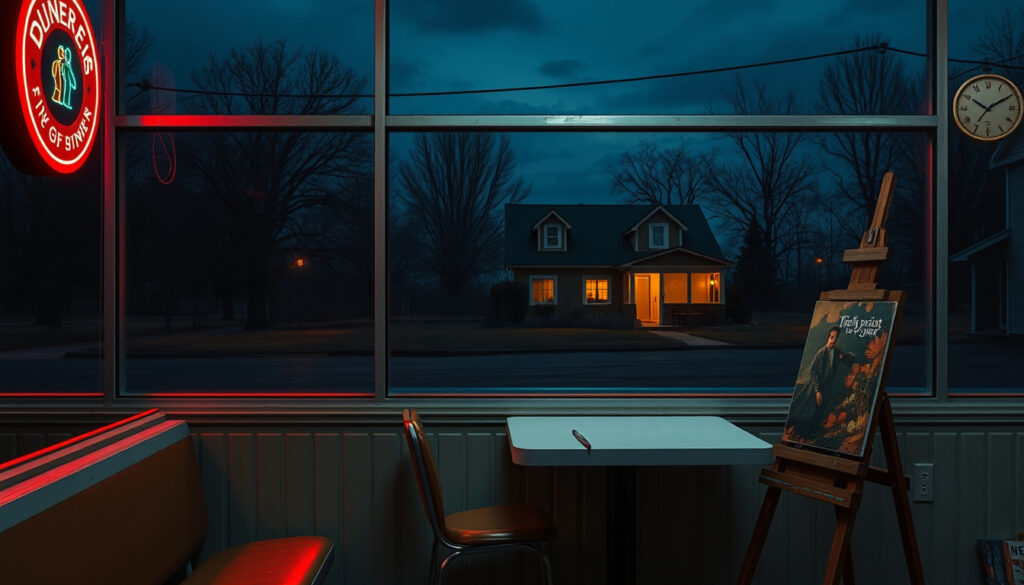
Edward Hopper: Life, Work, and Marriage of the Realist Painter
Few paintings stop you in your tracks like Nighthawks—that late-night diner scene where three customers and a server share a silent vigil under fluorescent light. The artist behind it, Edward Hopper, spent decades mastering the art of making empty spaces feel heavy with emotion.
Born: July 22, 1882 ·
Died: May 15, 1967 ·
Known for: Realist painting and printmaking ·
Famous work: Nighthawks (1942) ·
Spouse: Josephine Nivison Hopper (m. 1924) ·
Major collection: Whitney Museum of American Art
Quick snapshot
- American Realist painter and printmaker (Britannica biography)
- Married to Josephine Nivison Hopper in 1924 (Britannica biography)
- Whitney Museum holds the largest collection of his work (Whitney Museum artist page)
- Exact nature of his personal feelings toward Jo beyond accounts of a difficult marriage (Wikipedia on Josephine Hopper)
- Specific cause of death without citing an official biography or medical record (Wikipedia on Josephine Hopper)
- 1924: Marriage to Jo, start of most productive period (Whitney collection study for Nighthawks)
- 1942: Nighthawks completed in Manhattan (Whitney collection study for Nighthawks)
- 1967: Hopper dies; Jo bequeaths estate to Whitney in 1968 (The Matthews Gallery overview)
- Whitney continues to mount Hopper exhibitions regularly (Whitney exhibition archive)
- Legacy remains influential in film, photography, and popular culture (Whitney exhibition archive)
| Attribute | Value |
|---|---|
| Full Name | Edward Hopper |
| Movement | American Realism |
| Spouse | Josephine Nivison Hopper |
| Children | None |
| Primary Museum | Whitney Museum of American Art |
| Cause of Death | Age 84 (details vary by source) |
The table shows that Hopper’s biographical record is solid on major life events but deliberately vague on the specific medical cause of death.
What was Edward Hopper best known for?
His Signature Style of Urban Realism
Hopper is identified by Britannica (encyclopedic biography) as a 20th-century American realist painter. His scenes of diners, gas stations, hotel lobbies, and empty streets made him the defining chronicler of urban solitude. The Smithsonian Magazine (cultural history publication) called him the “Supreme American Realist of the 20th-Century.”
His use of light, as Britannica notes, “insulates persons and objects in space”—in Nighthawks, that eerie glow from an all-night coffee stand separates the figures from the dark city beyond. The pattern: light doesn’t connect; it isolates.
Iconic Paintings like Nighthawks and House by the Railroad
Nighthawks (1942) is Hopper’s most famous work. The Whitney Museum (largest Hopper collection holder) calls it his “most acclaimed composition,” noting it references his neighborhood near the Whitney’s present-day site in downtown Manhattan. House by the Railroad (1925) became the inspiration for the Bates family home in Alfred Hitchcock’s Psycho.
These paintings share a quiet tension: architectural precision meets emotional vacancy. The Smithsonian American Art Museum (national museum) calls Nighthawks “arguably Hopper’s best-known composition,” and the Smithsonian Magazine says the themes of disconnection and inaccessibility are “most fully realized” in that one work.
“Great art is the outward expression of an inner life in the artist, and this inner life will result in his personal vision of the world.”
— Edward Hopper, in interviews collected by the Whitney Museum
The implication: Hopper’s fame rests not on spectacle but on restraint—on what he leaves out of the frame.
What are some interesting facts about Edward Hopper?
Edward Hopper and Josephine Nivison Hopper
Hopper married Josephine Nivison, a fellow painter, in 1924. According to Britannica, she was his primary model for female figures and kept detailed records of his work. The marriage, by all accounts, was a volatile mix of artistic dependence and personal tension. Their letters, preserved in archives, show affection and resentment in almost equal measure.
After Hopper’s death in 1967, Jo became the gatekeeper of his legacy. Wikipedia’s Josephine Hopper page notes that she bequeathed the couple’s entire artistic estate to the Whitney Museum.
Jo Hopper managed her husband’s career with fierce dedication—yet his iconic paintings rarely show a strong woman; her own art remains largely overshadowed by his fame. That imbalance is central to understanding the marriage.
The Hopper Collection at the Whitney Museum of American Art
More related posts
 Julio Iglesias 2024: Net Worth, Enrique Rift & Health
 Meghan Trainor: Health, Family, and Cosmetic Changes
 Annie Wersching: Cause of Death and Career Legacy
 DWP Christmas Bonus Payment: Dates, Eligibility 2025
 Football Shirts: Cheap, Retro & World Cup Buying Guide
 Q-Park First Street Manchester: Rates, Booking & Guide
 John Lewis Credit Card Login: How to Access Your Account
 Carla Connor: Alison King vs the Character, Age & Marriage