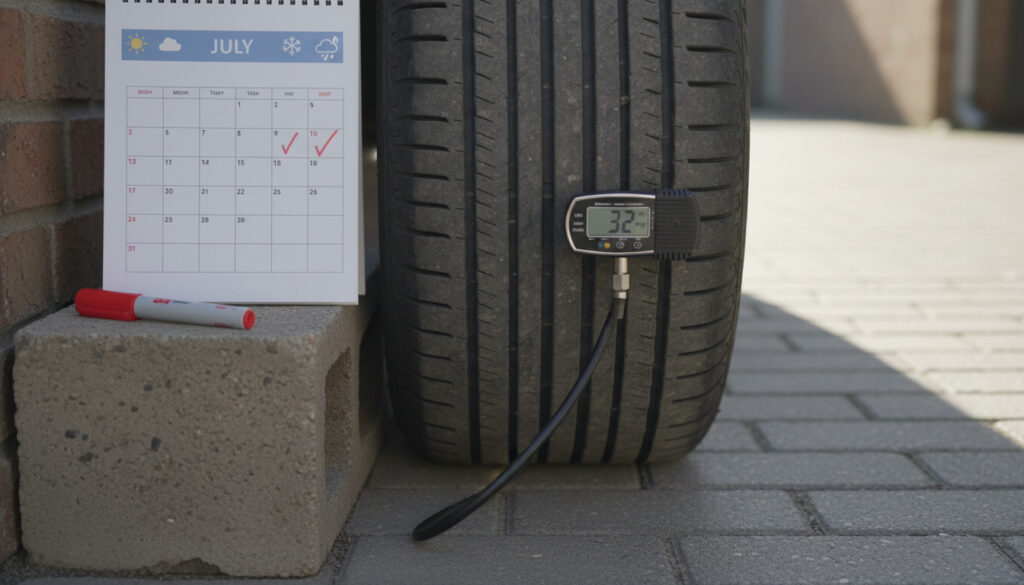
When Should Tyre Pressure Be Checked – Best Times, Frequency Guide
Accurate tyre pressure readings depend entirely on when you check them. Industry guidance consistently points to cold tyres—measured first thing in the morning or after several hours of rest—as the only reliable baseline for adjustments.
Heat generated through driving or ambient temperature increases causes tyre pressure to rise artificially. A hot tyre can display readings 2-6 PSI higher than its cold state, potentially leading to dangerous under-inflation once the rubber cools. This temperature sensitivity makes timing as critical as frequency.
For UK motorists, establishing a consistent checking routine ensures not only safety and fuel efficiency but also compliance with legal standards during MOT inspections. The following sections break down the optimal schedule, methods, and warning signs every driver should recognise.
How Often Should Tyre Pressure Be Checked?
Monthly minimum, or every 2 weeks in winter
Always check cold tyres for baseline accuracy
Early morning before driving, or after 2+ hours stationary
Digital gauge; avoid cheap analogue alternatives
- Regular monthly checks prevent uneven tread wear and extend tyre lifespan significantly.
- Fortnightly inspections become essential during cold weather when pressure drops 1-2 PSI per 10°C decrease.
- Vehicles equipped with Tyre Pressure Monitoring Systems (TPMS) still require manual gauge checks every two weeks.
- Pre-journey verification is mandatory before any trip exceeding 100 miles, regardless of recent checks.
- Proper inflation improves fuel economy by up to 10% while reducing CO2 emissions.
- UK MOT inspections examine tyre condition and inflation, with incorrect pressure potentially causing failure on safety grounds.
| Factor | Recommendation | Reasoning |
|---|---|---|
| Standard Frequency | Every 2-4 weeks | Catches slow leaks before they become dangerous |
| Winter Schedule | Every 2 weeks | Cold temperatures cause rapid pressure loss |
| Pre-Long Drive | Always check before departure | Prevents blowouts under sustained motorway heat |
| Tyre Temperature | Cold (<10°C above ambient) | Matches manufacturer specifications accurately |
| Gauge Type | Digital preferred | Provides precision within ±1 PSI |
| TPMS Reliance | Supplementary only | Systems activate only at dangerously low thresholds |
| Seasonal Adjustment | Monitor at season start | Annual variation can reach 15% in UK climates |
| Post-Driving Wait | Minimum 2 hours | Allows heat dissipation from friction |
Should Tyre Pressure Be Checked When Cold or Hot?
Manufacturer specifications universally assume cold tyre pressure measurements. These figures appear on the driver’s door placard, inside the fuel filler cap, or within the vehicle handbook, and they represent the optimal inflation level before the rubber encounters road friction or solar heating.
Why Cold Measurements Matter
Cold pressure provides the only reliable baseline matching engineering specifications. When tyres remain stationary for several hours, internal air temperature stabilises to ambient levels. This equilibrium eliminates variables introduced by driving dynamics or weather fluctuations.
The Heat Expansion Effect
For every 10°C (or 10°F) rise in temperature, expect pressure to increase by 1-2 PSI. Checking immediately after a motorway journey or during midday summer heat can therefore produce readings 4-6 PSI above the true cold value. Adjusting based on these inflated figures risks severe under-inflation once the tyre cools.
If circumstances require checking at a motorway service station or petrol forecourt, add 4-5 PSI to your cold recommended figure before making any adjustments. However, never deflate a hot tyre; the pressure will drop below safe limits upon cooling.
Exceptions to the Cold Rule
Michelin guidelines suggest that following very short, low-speed trips, waiting at least two hours suffices for readings adequate for regular monitoring. However, for precise adjustments or after sustained driving at highway speeds, overnight cooling remains the recommended standard.
What Is the Best Time to Check Tyre Pressure?
Early morning checks—conducted before the first drive of the day—provide the gold standard for accuracy. This timing ensures tyres have rested overnight, achieving thermal equilibrium with overnight ambient temperatures.
Daily Timing Considerations
Avoid checking immediately after driving, high-speed travel, or carrying heavy loads, all of which inflate readings artificially. Research confirms that even moderate urban driving raises internal tyre temperatures sufficiently to distort pressure measurements.
Pre-Journey Protocols
Long drives—particularly those planned like a weekend following the Sky Sports F1 Schedule to a race circuit—demand verification regardless of recent checks. Heat accumulation over distance compounds any existing under-inflation, increasing blowout risk during sustained high-speed cruising.
Winter mornings often show pressure 2-4 PSI lower than summer baselines. Adjust to manufacturer cold specifications at the season’s start and monitor more frequently, as UK weather can produce up to 15% annual pressure variation.
Post-Refuelling Checks
While convenient, petrol station forecourt checks often fail the cold-tyre test unless the vehicle has remained parked for several hours. For accuracy following fuel stops, rely on previous morning readings or add the 4-5 PSI compensation factor mentioned in manufacturer guidelines.
How to Check Tyre Pressure Correctly
Proper technique ensures readings reflect true inflation status rather than user error. The process requires minimal tools but demands consistent methodology.
Essential Equipment
Invest in a digital pressure gauge or high-quality analogue alternative; budget options often display inaccuracies exceeding ±5 PSI. Additionally, keep a portable compressor or ensure regular access to garage forecourt air lines.
Step-by-Step Procedure
Park on level ground to prevent bias in readings. Remove the valve cap and press the gauge firmly onto the stem until the hissing sound ceases. Note the reading in PSI or bar, then compare against the vehicle-specific data found on the door jamb sticker or handbook—BMW specifications typically reference cold settings at ambient lows.
If pressure falls below recommendations, attach the compressor hose and inflate in short bursts, rechecking frequently. For over-inflation, depress the valve core momentarily to release air, then verify again. Always inspect tread depth and sidewall condition during checks; UK law mandates minimum 1.6mm tread depth across the central three-quarters of the tyre.
Recognising Warning Signs
Visual indicators often precede dashboard warnings. Look for tyres appearing “squatting” against the rims, reduced contact patches, or bulging sidewalls. Behavioural signs include increased vibration through the steering wheel, reduced grip during cornering, and extended braking distances.
Tyre Pressure Monitoring Systems activate only at dangerously low thresholds and cannot detect over-inflation. Technical analysis confirms manual checks remain essential every two weeks regardless of electronic warnings.
The Complete Tyre Pressure Maintenance Schedule
- : Visual inspection for obvious flats, cuts, or objects embedded in treads.
- : Full pressure check for vehicles under heavy use or commercial applications.
- : Mandatory gauge verification for all vehicles during winter months.
- : Standard inspection interval for saloons, SUVs, and light commercial vehicles in temperate conditions.
- : Comprehensive check before any drive exceeding 50 miles or involving motorway speeds.
- : Adjustment to baseline specifications when temperatures shift significantly between summer and winter.
Established Facts vs Common Uncertainties
Confirmed Guidance
- Cold tyre checking provides the only accurate baseline for adjustments.
- Pressure drops 1-2 PSI per 10°C temperature decrease.
- Monthly checks represent the minimum safe frequency.
- Manufacturer specifications appear on door placards assuming cold readings.
Remaining Ambiguities
- Exact safe thresholds for temporary high-speed driving on slightly under-inflated tyres.
- Variations in TPMS calibration standards across different vehicle manufacturers.
- Precise fuel economy impact differences between brands and tyre models.
Why Tyre Pressure Matters for Safety and Economy
Under-inflation increases rolling resistance, forcing engines to work harder and consuming up to 10% more fuel. Conversely, over-inflation concentrates wear on the tyre’s centre section, reducing grip and accelerating replacement intervals.
From a legal perspective, while no explicit minimum pressure exists in UK MOT legislation, examiners reject vehicles showing dangerous under- or over-inflation during safety inspections. Correct pressure prevents the uneven wear patterns that contribute to roadworthiness failures.
For drivers covering rural routes—perhaps visiting locations featured in Clarkson’s Farm Season 3—maintaining correct pressure becomes critical where roadside assistance remains distant. Rough farm tracks and variable surfaces exaggerate the handling deficiencies caused by incorrect inflation.
Expert Sources and Industry Guidance
“Check your tyre pressures when the tyres are cold, ideally first thing in the morning before driving. For longer journeys over 100 miles, always verify pressure before departure.”
— The AA Technical Advisory
“TPMS is a safety net, not a maintenance tool. Manual checks every two weeks catch slow leaks that electronic systems miss entirely.”
— Continental Tyres Technical Division
“Waiting at least two hours after driving ensures heat dissipation, though overnight resting provides optimal accuracy for precise adjustments.”
— Michelin Engineering Guidelines
Key Takeaways for Motorists
Establishing a routine of checking cold tyre pressure every fortnight—or monthly minimum—prevents safety risks and unnecessary fuel expenditure. Always verify before long journeys, use a quality digital gauge, and treat TPMS warnings as critical alerts rather than routine indicators. Maintaining correct inflation represents one of the simplest yet most effective vehicle maintenance tasks available to drivers.
Frequently Asked Questions
What tyre pressure is considered safe for most vehicles?
Safe pressure varies by vehicle weight and tyre specification. Consult your handbook or driver’s door placard for cold PSI or bar ratings; never exceed maximum limits moulded into the tyre sidewall.
Do different vehicles require different checking frequencies?
Commercial vehicles and heavily loaded cars benefit from weekly checks, while standard passenger vehicles require fortnightly minimums. High-performance vehicles may need more frequent monitoring due to softer compound tyres.
Should I check pressure immediately after filling up with fuel?
Only if the vehicle has remained stationary for several hours. Otherwise, add 4-5 PSI to your cold target figure when checking at petrol stations, or wait until the following morning for accuracy.
Is checking tyre pressure once per month truly sufficient?
Monthly checks represent the absolute minimum. Fortnightly monitoring catches slow leaks earlier and accounts for seasonal temperature variations that monthly schedules might miss, particularly in autumn and spring.
What happens if I accidentally adjust pressure when tyres are hot?
Deflating hot tyres to reach cold specifications results in dangerous under-inflation once cooling occurs. If you must adjust hot tyres, add 4-5 PSI above your target, then recheck and correct when cold.
Can I rely solely on my car’s TPMS for pressure monitoring?
No. TPMS typically illuminates only when pressure drops 25% below safe levels. These systems cannot detect gradual leaks, seasonal pressure losses, or dangerous over-inflation, making manual gauge checks essential.
Where can I find the correct pressure for my specific vehicle?
Check the sticker inside your driver’s door frame, fuel filler cap, or glove compartment. Your vehicle handbook provides detailed tables often distinguishing between normal loads and heavy cargo configurations.
More related posts
 DNA Tests: Accuracy, Cost, Ancestry & Medical Guide in Ireland
 Golshifteh Farahani: Exile, Career, Net Worth & More
 Noah Lyles vs Usain Bolt: Speed, Disability, and Olympic Gold
 Signs of Mouth Cancer: Early Symptoms, Warning Signs & Self-Test
 Elf on the Shelf Ideas – Funny Pranks, Easy Setups and Room Tips
 Snakes and Ladders Abingdon: Reviews, Prices, Hours & Menu
 Clarkson’s Farm Season 3 – Release Date, Cast, Where to Watch
 Nancy Allen: From Carrie to RoboCop and Life Now