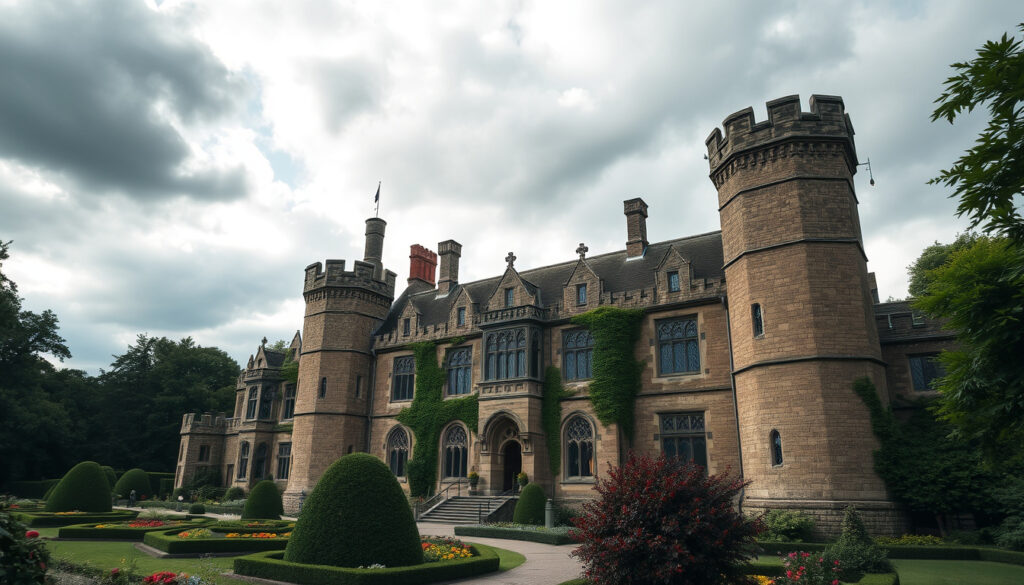
The Other Boleyn Girl: Movie, Book, True Story Facts
Few stories from Tudor England have been reshaped as many times as the Boleyn sisters’ rise and fall — and few adaptations have sparked as much debate among historians as The Other Boleyn Girl. Philippa Gregory’s 2001 novel brought Mary Boleyn out of the shadows, but the 2008 Hollywood film took significant liberties with what scholars believe actually happened.
Film Release Year: 2008 · Novel Publication Year: 2001 · Author: Philippa Gregory · Key Stars: Natalie Portman, Scarlett Johansson
Quick snapshot
- The novel was published in 2001 The Historical Novel Society
- The 2008 film stars Natalie Portman and Scarlett Johansson The Historical Novel Society
- Anne Boleyn was executed in 1536 Susan Bordo Substack
- Whether Mary Boleyn’s children were fathered by Henry VIII
- Whether Anne Boleyn has living descendants
- Exact streaming availability as of 2026
- Early 1500s: Mary Boleyn becomes Henry VIII’s mistress
- 1520s–1536: Anne rises to queen, then executed
- 2001: Gregory’s novel published
- 2008: Film adaptation released
- Separating dramatization from documented history
- Understanding why historians challenge Gregory’s claims
- Weighing the film’s reception against historical accuracy
This specs table consolidates key production and historical details for quick reference.
| Label | Value |
|---|---|
| Film Director | Justin Chadwick (2008 BBC TV version prior) |
| Runtime | 115 minutes |
| Genre | Historical drama |
| Novel Author | Philippa Gregory |
| Historical Period | 16th century |
Is The Other Boleyn Girl a true story?
Historical basis of the Boleyn sisters
Philippa Gregory’s novel, published in 2001, draws from real historical figures: Mary and Anne Boleyn, sisters who both caught the eye of Henry VIII. The sisters did exist, Anne did become queen, and she was executed in 1536 — all documented in the historical record. However, the novel takes significant creative liberties with the details of their lives and relationships at court.
The film condenses approximately 15 years of historical events (roughly 1521–1536) into a much shorter timeframe without clearly indicating time passage to viewers, according to The Historical Novel Society’s analysis.
Key fictional elements
Gregory’s novel portrays Anne Boleyn as “selfish, spiteful, vindictive, and immoral,” according to historian Susan Bordo. The narrative includes invented elements such as Anne coercing her brother George into incest to try to become pregnant after miscarrying — a claim historians debate. The novel also draws from Retha Warnicke’s 1989 biography for the controversial idea of a deformed fetus, a theory that remains contested among Tudor scholars.
Gregory claims her work is “rooted in the historical record,” yet historian David Loades stated she should have claimed to be writing pure fiction instead. Gregory holds a degree in 18th-century literature, not history.
The 2008 film goes further still, adding inventions including a scene of Henry VIII raping Anne, Mary begging for Anne’s pardon, and Mary rescuing the future Elizabeth I from court — none of which appear in the novel or historical records.
Bottom line: The film and novel dramatize the Boleyn sisters’ story but take significant liberties with documented Tudor history.
Did Mary Boleyn have a child with Henry VIII?
Mary’s role as Henry’s mistress
Mary Boleyn did serve as Henry VIII’s mistress before Anne captured his attention. Historical records confirm Mary was at court and drew the king’s interest — though historians debate exactly what that relationship entailed. What is clearer is that Mary married William Carey and had two children: Catherine Carey and Henry Carey.
Paternity debates
The question of whether Henry VIII fathered either of Mary Boleyn’s children remains genuinely unclear. Some historians have suggested the king may have acknowledged paternity, while others argue the evidence is circumstantial at best. This ambiguity is one area where the novel and film take firmer positions than the historical record supports.
The novel and film depict Mary as innocent and sexually inexperienced, coached by her family to seduce Henry. The Anne Boleyn Files notes there is no historical evidence that the Boleyn or Howard families schemed to use Mary and Anne as pawns or coached them in seduction — a significant departure from Gregory’s portrayal.
Bottom line: While Mary Boleyn was Henry VIII’s mistress, the paternity of her children remains disputed, and the family’s alleged scheming lacks historical support.
Does Anne Boleyn’s bloodline still exist?
Anne’s lack of surviving heirs
Anne Boleyn was executed in 1536 after being found guilty of treason, adultery, and incest. Her marriage to Henry VIII was declared null and void, meaning their daughter Elizabeth — the future Queen Elizabeth I — was deemed illegitimate. Anne had no surviving children from her marriage to Henry.
The 2008 film presents the incest charge as plausible, but historians note this accusation was likely Thomas Cromwell’s invention to secure Anne’s downfall, according to Susan Bordo’s analysis.
Boleyn family legacy
While Anne Boleyn’s direct line through Henry ended with Elizabeth I (who had no children), the Boleyn family name continued through other branches. However, claims about specific living descendants tracing directly to Anne are difficult to verify with certainty.
Anne’s execution without surviving children meant the Boleyn bloodline through her daughter Elizabeth became a dead end — yet genealogical connections through Mary’s line have persisted, creating unexpected modern links.
Bottom line: Anne Boleyn has no verified living descendants through her daughter Elizabeth, but connections through Mary’s line persist.
Is The Other Boleyn Girl a good movie?
Critical reception
The film received mixed reviews. “There is very little resemblance to the novel and even less to history,” noted The Historical Novel Society’s reviewer. Historians have criticized the film as less accurate than even the TV series “The Tudors,” which took its own liberties with the historical record.
The BBC television adaptation, produced before the 2008 Hollywood film on a lower budget, was criticized for a “reality TV style” but has been argued by some as the better adaptation. The Hollywood version added dramatic inventions that further distanced the story from documented history.
Audience ratings
Eric Bana, who played Henry VIII, has said he focused on playing the character as a man rather than researching the historical king deeply — a choice that affected the film’s accuracy. The film creates confusion between fantasy and truth, with reviewers noting audiences may struggle to separate Gregory’s dramatizations from actual Tudor history.
For viewers seeking historical accuracy: the 2008 film sacrifices reliability for drama. The novel popularized interest in overlooked Tudor women like Mary Boleyn, but its convincing style leads many readers to initially take it as factual.
Bottom line: The film prioritizes drama over accuracy, earning mixed reviews and criticism even from fans of historical fiction.
How is Kate Middleton a descendant of Mary Boleyn?
Genealogical links
Kate Middleton’s ancestry connects to the Boleyn family through Mary Boleyn’s line. While Anne Boleyn’s direct descendants ended with Elizabeth I, Mary’s children continued the family tree through the Carey line, eventually intermarrying with other English nobility across centuries.
This genealogical connection has been reported in various media and genealogy forums, though the exact generations and verified ancestry require careful historical tracing. The link represents how royal and aristocratic bloodlines interweave over hundreds of years.
Boleyn family ties
The Boleyn family, originally from Norfolk, rose to prominence in the early 16th century. Thomas Boleyn (Anne and Mary’s father) married Lady Elizabeth Howard, and their daughters’ positions at court eventually brought the family extraordinary influence — and ultimately, tragedy.
The irony is sharp: Anne, who became queen and changed English history, has no verified living descendants, while Mary, the quieter sister who lived longer and with less notoriety, became an ancestor to modern royalty including the British royal family’s newest members.
Bottom line: Through Mary’s Carey descendants, Boleyn bloodlines reached modern royalty despite Anne’s execution ending her direct line. The Boleyn sisters’ story, and how Mary’s descendants connect to modern royalty, is explored further at King Kong vs Godzilla who won.
Upsides
- Novel brought Mary Boleyn into mainstream awareness
- Film features strong performances from Portman and Johansson
- Sparked broader interest in Tudor women’s history
- Accessible entry point for those new to the period
- Gregory researched period details like sidesaddle riding
Downsides
- Novel presents fictional claims as historically grounded
- Film omits the Reformation, major historical context
- Historians criticize accuracy below even TV “The Tudors”
- Many readers confuse dramatization for documented history
- Gregory’s degree is in literature, not history
This comparison shows how each version balances entertainment against historical fidelity.
| Version | Director/Author | Key difference | Historical accuracy |
|---|---|---|---|
| 2001 Novel | Philippa Gregory | Mary-focused first-person narrative | High creative license, claims historical basis |
| BBC TV (pre-2008) | BBC | Lower budget, UK production | Critics preferred accuracy |
| 2008 Film | Justin Chadwick | Hollywood cast, added inventions | Even less accurate than novel |
| “The Tudors” TV | Michael Hirst | Serial format, multiple seasons | More complete context, some drama |
Four adaptations, four different balances between entertainment and accuracy — yet all draw from the same limited historical record about the Boleyn sisters.
The Boleyn Story Timeline
The timeline below maps key events from Tudor court to modern adaptations.
| Period | Event |
|---|---|
| Early 1500s | Mary Boleyn becomes Henry VIII’s mistress |
| 1520s | Anne Boleyn rises to prominence at court |
| 1533 | Anne marries Henry, becomes queen |
| 1536 | Anne executed; Mary alive, married to William Carey |
| 2001 | Philippa Gregory’s novel published |
| 2008 | Film adaptation released |
| 2013 | Susan Bordo publishes “The Creation of Anne Boleyn” |
The real story spans 15 years of Tudor court intrigue, compressed in the novel and film to fit dramatic needs — a common but consequential adaptation choice.
Clarity on Facts vs Fiction
What we can confirm
- Mary Boleyn was Henry VIII’s mistress before Anne
- The 2008 film stars Natalie Portman as Anne and Scarlett Johansson as Mary
- Anne was executed in 1536
- Gregory’s novel was published in 2001
- Peter Morgan co-wrote the screenplay
- The novel popularized Mary Boleyn for modern audiences
What remains uncertain
- Exact paternity of Mary Boleyn’s children
- Whether Anne Boleyn has living descendants
- Current streaming availability (platforms change frequently)
- How many readers initially believed the novel was factual
- The full extent of family coaching depicted in the novel
The implication: readers and viewers should approach both the novel and film as dramatizations informed by historical figures, not documentaries about them.
What Historians Say
“What is important is that the author should be honest, and not claim an historical basis which does not in fact exist.”
— David Loades, Historian
“If you are going to write a book or make a movie about real historical people I think you need to respect the history.”
— Tudor Historian, on YouTube
“I’m passionate about getting things right.”
— Philippa Gregory, Author
The gap between Gregory’s stated passion for accuracy and scholars’ assessments of her work highlights a central tension: the novel’s convincing style and author’s note lead many readers to believe they’re reading documented history when they’re engaging with historical fiction that takes significant liberties.
Bottom line: Historians call for honesty about fiction versus fact, a standard some feel Gregory’s work does not meet.
Summary
For readers drawn to the Boleyn story by Gregory’s novel or the 2008 film, the real history offers a fascinating but different narrative. The sisters did exist, Anne did become Henry VIII’s second wife and was executed in 1536, and Mary did catch the king’s eye before her sister — but the family scheming, the incest allegations, and Mary rescuing Elizabeth from court are dramatizations without strong historical support. Tudor enthusiasts should approach both adaptations as entertaining fiction informed by real figures, not reliable accounts of what actually happened.
Related reading: Little House on the Prairie Netflix · The Gone Season 2 where to watch
Philippa Gregory’s bestseller brought Mary Boleyn’s tale to life, yet true story, cast, book history delves deeper into the true story, cast, book and history.
Frequently asked questions
What is The Other Boleyn Girl about?
The story follows Mary Boleyn, the lesser-known sister of Anne Boleyn, as both women become involved with King Henry VIII. Mary first catches the king’s attention, but it’s Anne who rises to become queen — until her dramatic fall from grace.
Who directed The Other Boleyn Girl?
Justin Chadwick directed the 2008 feature film. A BBC television adaptation was produced earlier on a lower budget. Peter Morgan, known for blending fiction with historical fact, co-wrote the screenplay.
What is the cast of The Other Boleyn Girl?
Natalie Portman plays Anne Boleyn, Scarlett Johansson plays Mary Boleyn, and Eric Bana plays Henry VIII. The film features a strong cast that brings Tudor England to life on screen.
Is The Other Boleyn Girl on Netflix?
Streaming availability changes frequently and varies by region. Check your local Netflix catalog or other platforms like Amazon Prime, Hulu, or Apple TV+ for current options.
How accurate is The Other Boleyn Girl?
The novel and film take significant creative liberties with documented history. Historians criticize the adaptations for presenting fictional elements as historically grounded. The film omits major context like the Reformation and invents scenes not found in historical records.
Did Anne Boleyn have children who survived?
Anne Boleyn had one daughter, the future Queen Elizabeth I, but no surviving children from her marriage to Henry VIII. Elizabeth had no children, meaning Anne’s direct line ended with her execution in 1536.
Who wrote The Other Boleyn Girl novel?
Philippa Gregory, a novelist with a degree in 18th-century literature (not history), wrote the 2001 novel. She has stated her work is “rooted in the historical record,” though this claim has been disputed by historians.
Where can I watch The Other Boleyn Girl?
The 2008 film may be available through various streaming services and digital rental platforms. Availability varies by region and changes over time — check Amazon Prime Video, Apple TV, Google Play, or your local streaming services for current options.
More related posts
 Lord Voldemort: Origin, Story, Actors, and Key Facts
 Greg Wise: Age Difference with Emma Thompson and Family
 Jeff Lynne ELO: Illness, Sunglasses, and Name Change Facts
 Golshifteh Farahani: Exile, Career, Net Worth & More
 Sunrisers Hyderabad vs Gujarat Titans Match Scorecard IPL 2025
 Sophia Laforteza: Age, Nationality, KATSEYE Leader Facts
 Cute Pictures: Find, Draw, and Use Adorable Images