How Long for Soft Boiled Eggs – Tested Times for Runny and Jammy Yolks
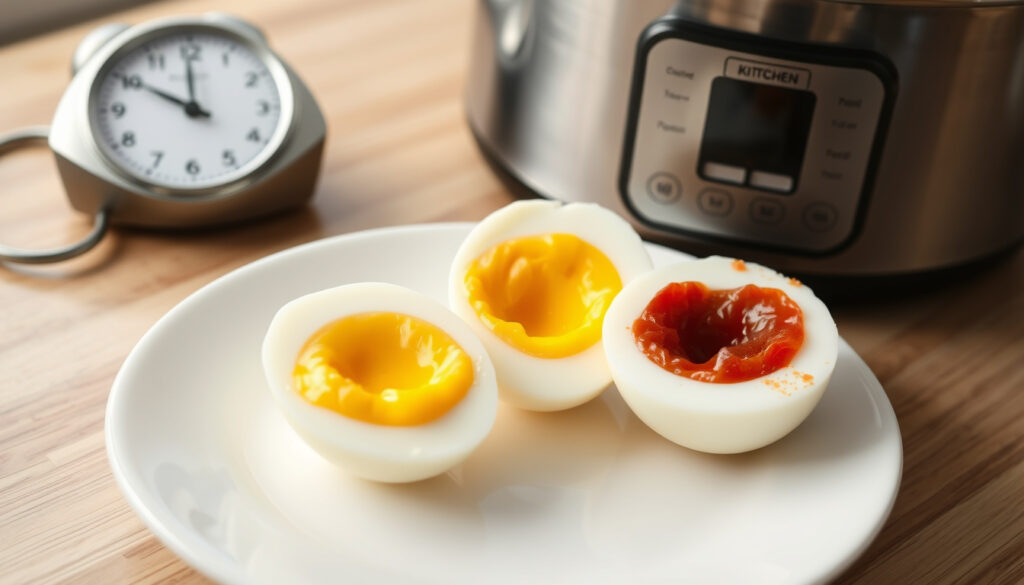
Soft-boiled eggs deliver that perfect combination: a fully set white with a runny or jammy yolk that spreads beautifully across toast or dips into ramen broth. Getting that texture right comes down to one thing—precise timing. The difference between a perfectly runny center and an overcooked yolk often comes down to 30 seconds on the clock.
This guide provides tested cooking times for large eggs at different starting temperatures, from fridge-cold to room temperature. Whether aiming for a pourable yolk in six minutes or a jammy, spreadable center at seven, the following chart and instructions offer a reliable starting point for consistent results.
How Long to Boil Soft Boiled Eggs?
The exact cooking time depends on three main factors: the egg’s starting temperature, the desired yolk texture, and the cooking method. Most recipes begin with large, fridge-cold eggs because they cook more evenly and are less likely to crack when lowered into boiling water. A digital timer started the moment eggs enter the water makes the difference between guesswork and precision.
Key variables affect every soft-boiled egg: egg size, freshness, and altitude all play a role. Starting with fridge-cold large eggs provides the most reliable baseline. From there, small adjustments yield the exact texture desired.
- Use a digital timer started the moment eggs enter boiling water
- Bring water to a full boil, then reduce to a gentle simmer before adding eggs
- Transfer eggs to an ice bath for 1–3 minutes to stop cooking and ease peeling
- Fridge-cold eggs prevent uneven cooking and reduce cracking risk
- For jammy yolks, add 30–60 seconds beyond the runny yolk time
- Peel under cool running water for cleanest results
- Larger eggs need an extra 30–60 seconds; smaller eggs need less
| Doneness | Fridge-Cold Eggs | Room Temp Eggs | Notes |
|---|---|---|---|
| Runny yolk | 6 minutes | 5–6 minutes | Fully liquid center; whites fully set |
| Jammy/soft yolk | 6.5–7 minutes | 6–7 minutes | Gooey but partially set; most popular |
| Medium yolk | 8 minutes | ~8 minutes | Creamy paste texture |
| Hard-boiled | 10 minutes | 8 minutes | Fully set yolk for comparison |
How Do You Know When Soft Boiled Eggs Are Done?
Visual cues provide the most reliable way to confirm doneness without cutting into the egg. A runny yolk appears completely liquid when tapped, while a jammy yolk holds its shape somewhat but spreads easily when pressed. A medium yolk has a creamy, mashed-potato consistency with no liquid movement. The white should be fully set and tender, not rubbery or translucent at the edges.
Understanding Yolk Temperature Zones
Egg whites set at approximately 180°F (82°C), while yolks begin firming around 158°F (70°C). This gap allows the white to cook through while the yolk remains soft. Timing controls how much heat reaches the yolk’s center, creating the gradient from liquid to fully set. Research from the United States Department of Agriculture confirms these temperature thresholds for egg protein coagulation.
Soft-boiled yolks cooked below 158°F (70°C) carry a salmonella risk higher than fully cooked eggs. Using fresh, pasteurized eggs reduces this risk significantly. According to the Centers for Disease Control and Prevention, approximately 1 in 20,000 eggs may contain salmonella. Jammy yolks at 6.5–7 minutes reach safer temperatures while maintaining their spreadable texture.
Best Methods for Soft Boiled Eggs
Two primary methods consistently produce soft-boiled eggs with predictable results: stovetop boiling and steaming. Each offers distinct advantages depending on the equipment available and the number of eggs being prepared. Understanding the food safety guidelines for egg preparation helps inform which method works best for your kitchen.
Stovetop Boiling
Fill a saucepan with enough water to submerge eggs completely. Bring to a rolling boil over high heat, then reduce to a gentle simmer. Using a slotted spoon, carefully lower eggs into the water and start the timer immediately. This method provides direct heat contact and works well for 1–12 eggs simultaneously. After cooking, transfer to an ice bath for 1–3 minutes before peeling.
Steaming Method
Place eggs in a steamer basket positioned over approximately half an inch of boiling water in a covered pan. Steam at 212°F (100°C) for slightly different results than boiling. Steamed eggs often peel more cleanly because the heat distributes more evenly through the shell.
| Doneness | Steaming Time (Fridge-Cold Large Eggs) | Notes |
|---|---|---|
| Runny yolk | 6–7 minutes | Similar to stovetop results |
| Medium yolk | 8–9 minutes | Slightly firmer center |
| Nearly set | 12–14 minutes | Approaching hard-boiled texture |
Microwave cooking for soft-boiled eggs is not advisable. Microwaves create uneven heating patterns that can cause the egg to explode or cook unpredictably. The stovetop and steaming methods described above provide reliable, tested results for consistent soft-boiled eggs every time.
Soft Boiled Eggs vs Other Boiling Times
Understanding how soft-boiled times compare to other doneness levels helps when meal planning or adapting recipes. The progression from soft to hard-boiled represents increasing heat exposure, each stage creating a different texture and culinary use.
For a runny yolk with fully set whites, six minutes works for large fridge-cold eggs. Jammy yolks—partially set with a thick, spreadable center—require 6.5 to 7 minutes. Medium yolks, with a creamy but firm center, reach their texture at eight minutes. Hard-boiled eggs, where the yolk is completely set, need ten minutes or longer.
Room temperature eggs cook faster, sometimes by a full minute, because the gradient between the cold interior and boiling water is smaller. This means the egg heats more quickly and can easily overcook if not monitored carefully.
Higher elevations have lower boiling points due to reduced atmospheric pressure. At significant altitudes, water simmers below 212°F (100°C), which means eggs take longer to reach the desired internal temperature. If cooking at elevations above 3,000 feet, adding 1–2 minutes to the standard times may be necessary. Testing with a small batch first helps calibrate for local conditions.
How to Peel Soft Boiled Eggs Easily
The ice bath is essential for easy peeling. Rapid cooling causes the egg white to contract away from the inner membrane attached to the shell, creating the gap needed for clean removal. Without this shock treatment, the shell adheres tightly and fragments, making peeling frustrating and time-consuming.
Fridge-cold eggs peel more easily than room temperature eggs because their whites are firmer and separate from the membrane more cleanly. Peeling under cool running water helps remove any remaining shell fragments without damaging the delicate white. The steaming method naturally produces eggs that peel more smoothly due to the even heat distribution during cooking.
The Science Behind Easy Peeling
As eggs cook, proteins in the white denature and bond with the inner shell membrane. Rapid cooling reverses this process by causing the proteins to contract. This contraction creates the separation that makes shells slip off in large pieces rather than crumbling away. A one-to-three-minute ice bath achieves this effect without over-chilling the egg’s interior.
The Soft Boiled Egg Process: Step by Step
Following a consistent sequence from start to finish produces reliable results batch after batch. Each step builds on the previous one, with timing as the critical variable that determines the final texture.
- 0 minutes: Bring a saucepan of water to a rolling boil over high heat
- 1 minute: Reduce heat to a gentle simmer; carefully lower eggs into water with a slotted spoon
- 6–7 minutes: Remove eggs immediately and transfer to an ice bath for 1–3 minutes
- 7–10 minutes: Peel under cool running water, starting from the wider end where the air pocket sits
What We Know and What Remains Unclear
The following summary separates established findings from areas where data remains limited. This distinction helps set realistic expectations for the soft-boiled egg cooking process.
| Established Information | Information That Remains Unclear |
|---|---|
| Six minutes produces runny yolks in large fridge-cold eggs | Precise adjustments for altitude variations |
| 6.5–7 minutes yields jammy, spreadable yolks | Consistent Instant Pot timing parameters |
| Ice bath dramatically improves peelability | Optimal times for extra-large or jumbo eggs |
| Stovetop and steaming methods are reliable | How egg freshness affects timing precision |
| Room temperature eggs cook approximately 1 minute faster | Regional variations in egg sizing standards |
Why Precision Matters in Soft Boiling Eggs
Soft-boiled eggs occupy a narrow window between undercooked and overcooked. Unlike hard-boiled eggs, where a few extra minutes cause minimal texture changes, soft-boiled eggs respond dramatically to small timing adjustments. A 30-second difference can transform a pourable yolk into a jammy one, or push a jammy yolk toward medium doneness.
This sensitivity to timing explains why professional kitchens and careful home cooks rely on digital timers rather than eyeballing the process. The investment of a few dollars in a reliable timer pays dividends in consistently excellent results. For those exploring other precision cooking techniques, understanding heat transfer and timing relationships proves equally valuable.
Where These Recommendations Come From
The cooking times and methods presented here draw from multiple tested sources in the recipe and food science community. Recipe developers who specialize in egg cookery have validated these timings across numerous batches, noting variations and edge cases where they exist. Food safety guidelines from government agencies inform the safety considerations around yolk temperature and salmonella risk. The Food and Drug Administration provides comprehensive guidance on egg safety and cooking temperatures.
The key to perfect soft-boiled eggs is consistency in both your starting conditions and your timing. Once you find the exact minute mark that works for your preferred yolk texture, stick with it.
Those interested in the broader science of egg cooking will find the relationship between temperature and protein coagulation a useful framework for understanding not just soft-boiled eggs, but poached eggs, custards, and meringues as well. The principles scale across multiple cooking methods and applications. The Egg Nutrition Center offers additional resources on egg composition and cooking science.
Summary
Six minutes produces soft-boiled eggs with runny yolks when using large, fridge-cold eggs submerged in simmering water. For jammy, spreadable yolks, extend the cooking time to 6.5–7 minutes. Room temperature eggs cook approximately one minute faster, so adjustment is necessary when not starting from the refrigerator. An ice bath after cooking stops the cooking process and creates the shell-to-membrane gap that makes peeling straightforward. While microwave cooking is not recommended due to uneven heating risks, both stovetop boiling and steaming deliver reliable, tested results. For those preparing larger meals, these timings pair well with a roast leg of lamb timing guide when planning a full breakfast spread.
Frequently Asked Questions
Is 6 minutes enough for soft boiled eggs?
Yes, six minutes produces a runny yolk in large fridge-cold eggs submerged in simmering water. The white will be fully set while the center remains completely liquid.
How long do soft boiled eggs take from room temperature?
Room temperature eggs typically need about one minute less than fridge-cold eggs. For a runny yolk, start checking at five minutes; for jammy yolks, try six minutes instead of seven.
What is the difference between runny and jammy yolk?
A runny yolk flows completely when the egg is opened, while a jammy yolk holds together but spreads easily when pressed with a spoon. Jammy yolks are partially set with a thick, custard-like texture.
Are soft boiled eggs safe to eat?
Soft-boiled eggs carry a slightly higher salmonella risk than fully cooked eggs because the yolk does not reach 158°F (70°C). Using fresh, pasteurized eggs minimizes this risk. The jammy texture at 6.5–7 minutes reaches safer temperatures than runny yolks.
Should soft boiled eggs be eaten hot or cold?
Soft-boiled eggs are traditionally served warm, immediately after peeling, often with toast soldiers for dipping. They can be served cold in salads, though the yolk will continue to set slightly as they cool.
Why did my soft boiled egg explode in the microwave?
Microwaves heat food unevenly, creating hot spots within the egg. The trapped steam has no escape route from the sealed shell, causing pressure to build until the egg explodes. This is why microwave cooking is not recommended for soft-boiling eggs.
How do I adjust cooking time for different egg sizes?
Larger eggs require an additional 30–60 seconds beyond the standard time. Smaller eggs may need 30 seconds less. Extra-large and jumbo eggs benefit from the longer cooking window, while small eggs cook more quickly.
More related posts
 Wil Wheaton: Career, Net Worth, and Why He Left Star Trek
 HM Revenue & Customs – Guide to Services, Contacts and Login
 Arthur Ashe: Biography, Tennis Career, and Activism
 Louie Spence: Career, Net Worth and Recent TV Work
 Short French Tip Nails: Chic Ideas for Every Length
 Mandip Gill: Biography, Career, Current Projects & Personal Life
 Small Double Bed with Mattress: Compact Comfort Solutions
 Normal Blood Pressure by Age: Chart for Women and Men