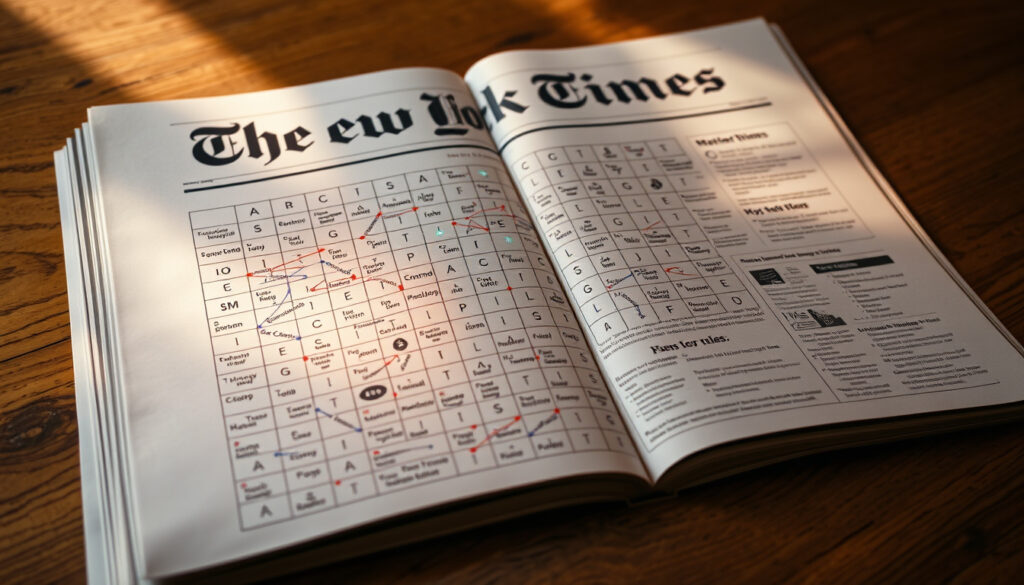
New York Times Strands – Complete Guide to Rules and Tips
New York Times Strands is a free daily word puzzle game that challenges players to discover hidden words within a grid of scrambled letters. Since its launch in 2024, the game has become a popular addition to the growing family of NYT word games, offering a fresh take on the word puzzle genre that differs significantly from the viral sensation Wordle.
The game presents players with a unique blend of word search and thematic puzzle-solving, where each daily challenge comes with a cryptic hint title that guides participants toward the hidden vocabulary. Unlike traditional word games that rely on random letter generation, Strands incorporates deliberate theming that rewards both vocabulary knowledge and lateral thinking. The experience is designed to be accessible yet challenging, appealing to casual players and word game enthusiasts alike.
Available exclusively through the NYT Games platform, Strands has quickly established itself as a daily ritual for many puzzle solvers. The game operates within a structured 6×8 grid containing 48 letters, where players trace paths connecting adjacent letters to uncover words related to the daily theme. This format creates a distinctive puzzle experience that combines the spatial awareness of word searches with the thematic constraints of cryptic crosswords.
What is New York Times Strands?
New York Times Strands is the latest entrant in the NYT Games lineup, joining established titles like Wordle and Connections as part of the newspaper’s strategic expansion into digital puzzle experiences. The game was developed internally by NYT Games and released in 2024, positioning itself as a sophisticated alternative to the guessing mechanics that characterized earlier word games.
The core premise centers on uncovering theme words concealed within a letter grid, guided by a daily hint title that provides context without directly revealing the answers. This thematic approach distinguishes Strands from pure vocabulary tests, instead rewarding players who can think conceptually about word categories and associations. The game debuted on the web platform before expanding to mobile applications, ensuring accessibility across different device preferences.
- Launch Year: 2024
- Developer: NYT Games
- Platforms: Web browser, iOS app, Android app
- Format: Daily themed word puzzle
Key Features and Game Mechanics
The game introduces several unique mechanics that set it apart from other word puzzles. Players trace paths through adjacent letters—moving up, down, left, right, or diagonally—to form words of five or more letters. Each daily puzzle contains a hidden spangram, a longer thematic word that must stretch from one edge of the grid to the opposite side. Finding the spangram is not required for completion but represents the ultimate achievement for skilled solvers.
Theme words, typically numbering between four and seven per puzzle, appear in blue when discovered, while the spangram highlights in yellow. The remaining letters can be used to form hint words—additional valid words of four or more letters that don’t belong to the theme but help players progress by unlocking hints about undiscovered theme words.
| Game Element | Description | Visual Indicator |
|---|---|---|
| Theme Words | 4–7 hidden words per puzzle | Blue highlight |
| Spangram | Long thematic word spanning grid edges | Yellow highlight |
| Hint Words | Non-theme words unlocking assistance | No special highlight |
| Grid Dimensions | 6 columns × 8 rows | 48 total letters |
| Word Length | Minimum 5 letters for theme/hints | 4+ for hint words |
| Path Rules | Adjacent letters only, can reuse letters | Winding paths allowed |
| Scoring System | Perfect score without hints | Performance tracked |
How Do You Play Strands?
Playing NYT Strands requires understanding the fundamental rules governing letter selection and word discovery. Players interact with the grid by clicking or tapping on consecutive letters that share an edge or corner with the previous selection. The path can wind in any direction, allowing for creative routing through the letter arrangement. Each valid word must contain at least five letters and relate to the daily theme indicated by the puzzle’s hint title.
Understanding the Spangram
The spangram represents the pinnacle of achievement in any Strands puzzle. This special word describes the puzzle’s theme and must physically traverse the grid from one boundary to the opposite side. For example, a puzzle themed around facial hair might feature “MUSTACHE” as its spangram, with the letters arranged so that tracing the word connects the left edge to the right edge or top to bottom.
Unlike regular theme words, the spangram appears in a distinctive yellow color when found, signaling to players that they have discovered the puzzle’s central concept. Some spangrams even form interesting shapes as they cross the grid—developers have occasionally created Easter eggs where the word’s path creates visual patterns like mustaches or other themed imagery. Finding the spangram before completing all theme words is possible but not required for victory.
Since the spangram must touch opposite edges of the grid, examining the perimeter letters can reveal promising starting points. Long words that naturally span the grid’s width or height often contain common letter combinations that appear along the edges.
Grid Size and Layout
Every Strands puzzle occupies a consistent 6-column by 8-row grid containing exactly 48 letters. This fixed dimensions ensures familiarity across puzzles while the varying letter arrangements guarantee unique challenges daily. The grid’s rectangular shape provides enough space for multiple theme words without becoming overwhelming, and the winding path mechanic means letters can be arranged creatively rather than in straight lines.
The letters are distributed to facilitate theme word discovery while maintaining challenge. Puzzle designers ensure that theme words connect through adjacent letters without requiring players to trace impossibly long paths. Paths may cross over previously used letters, allowing strategic reuse of common letter combinations that appear multiple times in the grid.
Using Hints Effectively
Hints in Strands are earned rather than given freely. Players discover hint words by forming valid words of four or more letters that do not belong to the puzzle’s theme. Every three such words unlock a single hint, revealing the location of one remaining theme word. The hint displays a highlight on the grid showing where that word is located, though players can choose to ignore the assistance and maintain their perfect score status.
The hint system creates an interesting risk-reward dynamic. Using hints guarantees puzzle completion but reduces the accomplishment’s prestige, while pursuing perfection requires greater vocabulary breadth and thematic intuition. Some players deliberately find multiple hint words early, banking hints before attempting the remaining theme words without assistance.
Invalid words or random letter selections carry no punishment in Strands. Players can experiment freely, testing combinations and learning from unsuccessful attempts. This forgiving design encourages discovery and reduces frustration compared to games that penalize incorrect guesses.
Today’s Strands Answers and Hints
Each day brings a new Strands puzzle with fresh theme words and a unique spangram. The daily release follows a consistent schedule, making it easy for players to incorporate puzzle-solving into their routines. Players who complete the puzzle receive performance feedback indicating how many hints they used, with the coveted “Perfect” designation reserved for those who solved the puzzle without any hints.
Finding Daily Answers
NYT intentionally avoids publishing daily answers to preserve puzzle integrity and encourage genuine solving rather than answer-seeking. The platform provides results showing which theme words were found and how hints were used, but the specific answers remain private to each player. This approach maintains the community aspect of shared daily challenges while preventing spoiler contamination across social media and search results.
For those seeking assistance without full revelation, the hint system provides middle ground. Players can earn hints by discovering non-theme words, gradually revealing theme word locations without having the answers handed over entirely. This graduated assistance respects different player preferences, from those wanting pure challenge to those needing occasional guidance.
Accessing the Archive
Past puzzles can be revisited through an archive feature accessible via NYT account login. Subscribers may enjoy enhanced archive capabilities, including extended access to historical puzzles and additional features. The archive allows players to tackle puzzles they missed or revisit particularly enjoyable challenges from previous days.
Community resources have emerged to document puzzle themes and spangrams, though detailed solution paths remain largely undocumented. Players seeking to understand puzzle design or learn from past challenges can explore these community-maintained records while respecting the spirit of genuine puzzle-solving.
Tips and Strategies for Winning Strands
Successful Strands solving combines vocabulary strength with strategic approach. The daily hint title provides the thematic framework, but interpreting it correctly requires thinking beyond obvious associations. Puzzle titles often employ wordplay or indirect references, rewarding solvers who can make conceptual leaps rather than simply listing category members.
Essential Playing Techniques
Beginning in the grid’s corners offers strategic advantages for several reasons. Corner positions have fewer possible connections, making it easier to eliminate invalid letter combinations and identify promising pathways. Letters positioned at edges similarly limit directional options, helping players quickly determine which words could potentially form spangrams.
Common letter pairs and repeated letters deserve close attention. Frequent combinations like “CK,” “TH,” or “ING” often appear in longer words, while double letters such as “LL” or “SS” can anchor memorable words. Examining the grid’s letter distribution reveals patterns that suggest potential theme words before they are officially discovered.
When the daily title seems cryptic, consider common wordplay formats. Phrases like “By the yard” might indicate measurements, while “Think outside the box” could reference cardboard or spatial concepts. Breaking down the hint’s structure often reveals the underlying theme more clearly than surface-level interpretation.
Comparing Strands and Wordle
While both games belong to the NYT word puzzle family, their mechanics differ substantially. Wordle challenges players to guess a fixed five-letter word within six attempts, using color-coded feedback to narrow possibilities. Strands instead asks players to find multiple hidden words within a spatial grid, rewarding exploration and thematic thinking rather than deductive guessing.
The hint systems also diverge significantly. Wordle provides automatic feedback with each guess, while Strands requires players to earn hints by discovering non-theme words. This earning mechanic adds an extra layer of engagement, transforming potential obstacles into progress opportunities.
| Aspect | NYT Strands | NYT Wordle |
|---|---|---|
| Grid Format | 6×8 letter grid | 5×6 guess grid |
| Primary Mechanic | Path tracing through letters | Letter guessing |
| Daily Content | Multiple theme words plus spangram | Single five-letter word |
| Hint System | Earned through word discovery | Built into each guess |
| Theme Element | Daily hint title guides solving | No theme or hints |
| Scoring | Perfect or hint-based rating | Guess count (1–6) |
Is Strands Free and How to Access It?
NYT Strands operates on a freemium model, allowing anyone to play daily puzzles without payment. The base experience includes full access to each day’s new puzzle, the hint system, and completion tracking. This accessibility has contributed significantly to the game’s rapid adoption, removing financial barriers that might discourage casual experimentation.
A subscription to NYT Games enhances the experience through ad-free gameplay and expanded archive access. Subscribers can revisit previous puzzles without restrictions and enjoy uninterrupted puzzle-solving sessions. However, the core gameplay remains fully functional for non-subscribers, making Strands genuinely free rather than merely a trial offering.
Accessing Strands requires visiting either the official NYT Games website or downloading the NYT Games mobile application. The web version at nytimes.com/games provides immediate browser-based play, while the dedicated apps for iOS and Android offer optimized mobile experiences with touch-based grid interaction.
Sources and Developer Information
NYT Games develops and maintains Strands as part of the New York Times Company’s digital offerings. The game represents the newspaper’s strategic investment in interactive content that engages readers beyond traditional journalism. Developer communications have emphasized the team’s commitment to daily puzzle quality and ongoing platform improvements.
The game’s design reflects careful consideration of player experience, balancing challenge with accessibility to create an engaging daily ritual for word puzzle enthusiasts.
Community creators have contributed valuable resources including strategy guides, puzzle analyses, and archival documentation. These resources complement official materials while respecting the boundaries of fair use and community guidelines.
Summary
New York Times Strands offers a distinctive daily word puzzle experience through its themed grid format and earning-based hint system. The game successfully differentiates itself from other NYT word games by combining word search mechanics with conceptual thinking requirements. Whether accessed through web browsers or mobile applications, players enjoy full puzzle functionality at no cost, with optional subscription benefits enhancing the experience further. Those interested in exploring the game can find additional context in resources like What Does 67 Mean – Viral Slang and 2025 Word of the Year for broader word puzzle trends, or review How to Invest Money – Step-by-Step for Beginners for related strategic thinking approaches. Regular engagement with Strands builds vocabulary familiarity and thematic recognition skills that improve performance over time, making each daily puzzle both a standalone challenge and part of an ongoing skill-building journey.
Frequently Asked Questions
Is Strands free to play?
Yes, Strands is completely free to play. All daily puzzles are accessible without a subscription. Optional premium features include ad-free gameplay and expanded archive access.
What is the Strands grid size?
Every Strands puzzle uses a fixed 6-column by 8-row grid containing 48 letters total. This consistent format ensures familiar gameplay across all daily challenges.
How does the hint system work?
Players earn hints by finding three non-theme words (words of 4+ letters that don’t belong to the puzzle’s theme). Each earned hint reveals one undiscovered theme word’s location on the grid.
What makes Strands different from Wordle?
Unlike Wordle’s single-word guessing format, Strands asks players to find multiple theme words within a grid using path-tracing mechanics. Strands also includes daily theme titles that guide solving, whereas Wordle provides no thematic hints.
Can I play past Strands puzzles?
Archive access requires an NYT account login. Subscribers may enjoy enhanced archive capabilities with extended puzzle access beyond recent daily challenges.
What is a spangram in Strands?
The spangram is a special themed word that must stretch from one edge of the grid to the opposite edge. It highlights in yellow when found and represents the puzzle’s central concept, though finding it is optional for puzzle completion.
Where can I play NYT Strands?
Strands is available on the official NYT Games website and through dedicated iOS and Android applications. Both web and mobile versions offer identical gameplay experiences.
Does solving wrong words carry penalties?
No penalties exist for incorrect words or random letter selections in Strands. Players can experiment freely, and even invalid guesses contribute toward earning hints through discovery.
More related posts
 Vanguard Stocks and Shares ISA: Review, Pros & Cons
 Convert kg to Stones – NHS Weight Conversion Guide
 Unity Mitford: Fascist Aristocrat’s Life, Brain Damage, Death
 Chloe Burrows: Love Island, ADHD, Relationships, Age, Net Worth
 How to Invest Money – Step-by-Step for Beginners
 King of the Hill Revival: Season 15, Cast & Why It Was Cancelled
 Eilish McColgan: Career, Injuries & Mother Comparison
 Alan Turing: His Life, Codebreaking, and Legacy in AI