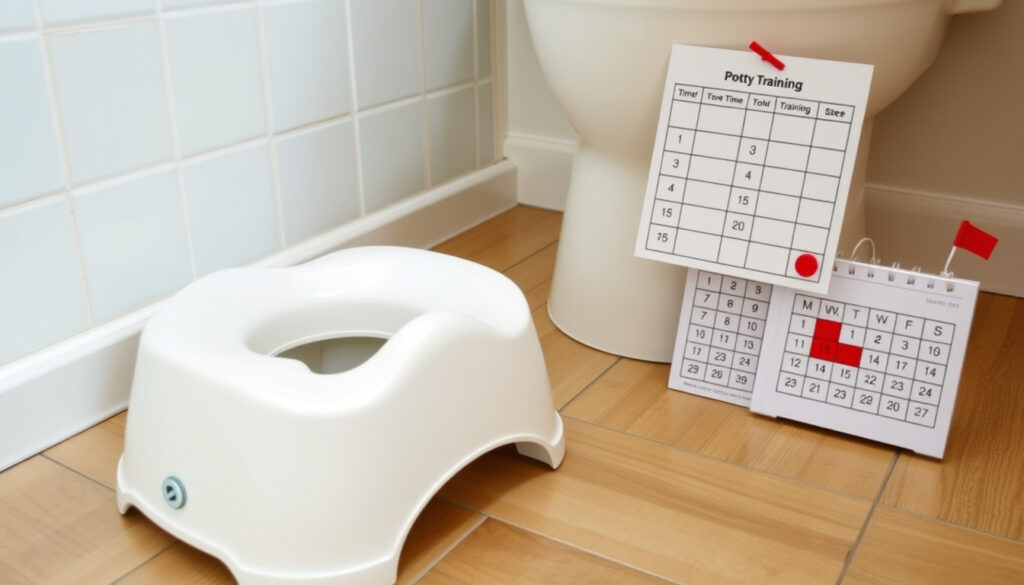
How to Potty Train: 3-Day Method, 10-10-10 Rule & Red Flags
Anyone who’s tried potty training a toddler knows it can feel like a high-stakes guessing game—when to start, what method to use, and how to spot trouble. But the 3-day method and the 10-10-10 rule offer structured approaches that cut through the chaos, and knowing a few red flags can save you weeks of frustration. This guide lays out concrete steps and expert-backed signals so you can decide what fits your child’s readiness.
Average age to begin: 27 months (Mayo Clinic, 2024) ·
Girls typically finish earlier than boys: by 2-3 months (NIH data) ·
Most children are fully trained by: age 3-4 (CDC) ·
3-day method success rate: 80% with consistent application (Eric.org.uk)
Quick snapshot
- Most children show readiness between 18-30 months (Mayo Clinic (leading U.S. hospital network))
- Girls tend to train 2-3 months earlier than boys (NIH (U.S. health research agency))
- Punishing accidents prolongs the process (HealthyChildren.org (American Academy of Pediatrics))
- Optimal exact month to start varies per child (ERIC (UK charity for children’s bladder and bowel health))
- Long-term effect of early vs. late start on bladder control (NIH (biomedical research database))
- Whether 3-day method is superior to gradual for all children (HealthyChildren.org (AAP))
- Readiness signs appear between 18-24 months (CDC (U.S. public health agency))
- Most children daytime trained by age 3.5 (Mayo Clinic)
- Nighttime dryness often achieved by age 4-5 (ERIC)
- Try the 3-day method if you have a long weekend (Cleveland Clinic (U.S. academic medical center))
- Use the 10-10-10 rule as a gentle alternative (What to Expect (leading parenting site))
- Monitor for red flags; consult pediatrician if needed (HealthyChildren.org (AAP)) (Cleveland Clinic (U.S. academic medical center))
Five key facts define the typical potty training journey, from readiness to completion.
| Fact | Value |
|---|---|
| Children ready to start | 18-30 months on average |
| Full training typical completion | By age 3-4 (CDC) |
| 3-day method recommended age | At least 22 months |
| Boys typically finish | 2-3 months later than girls |
| Average length of training | 3-6 months for daytime |
What is the right age to start potty training?
Average age range (18-30 months)
- Most children show readiness between 18-24 months, according to Mayo Clinic.
- Eric.org.uk notes that bladder awareness can appear as early as 6-9 months for some children, but active training typically starts later.
- Girls often start 2-3 months earlier than boys, a pattern confirmed by NIH data (U.S. health research agency).
Readiness signs vs. calendar age
Calendar age matters less than behavioral signs. HealthyChildren.org (American Academy of Pediatrics) lists key indicators: staying dry for two hours, showing interest in the bathroom, pulling pants up and down, and communicating the need to go. Starting before these signs appear often leads to longer training times.
The implication: watching for readiness beats picking a birthday. If your child isn’t showing interest at 27 months, waiting a few more weeks is fine.
How do you potty train using the 3-day method?
- Day 1: Remove diapers, keep child naked below the waist, offer extra liquids, and prompt every 15–20 minutes.
- Day 2: Reduce prompts as the child begins to self-initiate; use training pants and reward successes with praise.
- Day 3: Introduce underwear, continue reinforcing independence, and keep calm about accidents.
Day 1: potty clothing only
- Remove diapers and keep the child naked below the waist, as recommended by What to Expect (top parenting resource).
- Offer more liquids to create frequent practice opportunities.
- Prompt every 15-20 minutes and watch for squirming or squatting.
Day 2: consolidate and practice
- By day two, Pampers (global baby care brand) suggests reducing prompts as the child begins to self-initiate.
- Keep using training pants or underwear; avoid diapers during waking hours.
- Reward every successful potty use with praise – no punishment for accidents.
Cleveland Clinic describes the method as “naked potty training” with very frequent prompting. The 3-day approach requires full-time parent presence – no park trips, no playdates, according to The Everymom (parenting community).
The implication: families with limited time may find the 3-day method a worthwhile investment despite its intensity.
What does the 10 10 10 rule mean for potty training?
10 minutes on potty
- After meals or drinks, have the child sit on the potty for 10 minutes.
- Use a timer to make it predictable, as suggested by What to Expect (leading parenting site).
10 minutes off potty
- Allow 10 minutes of free play between attempts.
- This keeps pressure low and gives the child a break.
10 minutes of activity
- After a successful potty use, spend 10 minutes on a focused activity (reading, puzzle) as a reward.
- This reinforces the connection between using the potty and positive attention.
The 10-10-10 rule offers a gentler structure than the 3-day method. It’s especially useful for children who resist sitting on the potty, because the intervals are short and predictable. HealthyChildren.org (AAP) notes that consistent routines, rather than rigid timing, are what build success.
The 10-10-10 rule works best as a fallback for children who are ready but not responding to the 3-day method. It can stretch the process to 2-3 weeks, but it reduces stress for both parent and child.
The pattern: choose the 10-10-10 rule if your child needs a lower-pressure introduction to potty training.
What are red flags to watch for during potty training?
Medical red flags (pain, constipation, UTI)
- Refusing to urinate for more than 12 hours warrants a pediatrician visit, advises HealthyChildren.org (AAP).
- Painful urination or straining can indicate infection.
- Chronic constipation is a common cause of training resistance.
Behavioral red flags (resistance, fear)
- Regression after 3-4 weeks of success may need professional advice, per ERIC (UK charity).
- Extreme fear of the potty or toilet can signal that the child isn’t ready.
- Punishing accidents only compounds the problem.
What this means: red flags are not failures – they’re signals. If your child is showing pain or fear, pause training and talk to your pediatrician. Forcing through resistance can turn a 3-month process into a 6-month ordeal.
Do’s and Don’ts of potty training a toddler
Do start only when your child is ready
- Do praise every small success – UC Davis Health emphasizes that positive reinforcement accelerates learning.
- Do offer a potty chair before transitioning to the big toilet, as smaller children feel more secure.
Don’t punish accidents
- Don’t start during major life changes like a new sibling or moving house.
- Don’t use diapers during the day once you’ve committed to training – it sends mixed signals.
Do use consistent routines
- Do schedule potty breaks after meals, before bath, and before bed.
- Do keep a potty in the room where the child plays, so it’s always accessible.
The pattern: consistency beats intensity. Parents who pick one method and stick with it for at least two weeks see fewer accidents than those who switch methods frequently.
Clarity check: what’s confirmed and what’s still uncertain
Confirmed facts
- Most children ready between 18-30 months (Mayo Clinic)
- Girls tend to train earlier than boys (NIH)
- Punishing accidents prolongs training (HealthyChildren.org)
What’s unclear
- Optimal exact month to start for each child varies
- Long-term effect of early vs. late start on bladder control
- Whether 3-day method is superior to gradual for all children
Expert perspectives
“Readiness is about skills, not age. If your child can stay dry for two hours, follow simple instructions, and pull pants up and down, they’re ready – even if they’re only 18 months.”
— Dr. Jennifer Shu, pediatrician, quoted in HealthyChildren.org
“The most important thing is to stay calm and avoid punishment. Accidents are part of the learning process, and a child who feels pressured will only resist more.”
— ERIC advice team, ERIC (UK charity)
For parents in the UK or US, the choice between the 3-day method and the 10-10-10 rule comes down to schedule and temperament. If you have a long weekend and a child who’s showing readiness, go intensive. If you need a gentler ramp, the 10-10-10 rule gives structure without overwhelm. The implication: start with readiness signs, not a calendar; pick a method you can stick with; and watch for red flags that mean “pause, don’t push.” For the parent juggling work and childcare, the smartest move is to wait until you have three uninterrupted days – or accept that slower progress is still progress.
Related reading: Escape Room Guide: Rules, ADHD Benefits & Ireland’s Best
pottypirates.com, in.pampers.com, newtonbaby.com, theeverymom.com, aranchmom.com, ocean-pediatrics.com, youtube.com
Frequently asked questions
Can you potty train a 1-year-old?
Most children aren’t developmentally ready before 18 months. Starting earlier often leads to longer training duration. Mayo Clinic recommends waiting for signs of readiness.
What is the fastest way to potty train a toddler?
The 3-day method is the fastest approach, with an 80% success rate when applied consistently. It requires full-time parent presence. Cleveland Clinic outlines the steps.
How many accidents are normal in the first week?
Accidents are very common – 5-10 per day in the first week is typical. The number decreases as the child learns to recognize the urge. ERIC advises staying calm and cleaning up without fuss.
Should I use pull-ups or underwear for potty training?
Underwear is recommended for daytime training because it helps the child feel wetness. Pull-ups can be used for naps and nighttime. What to Expect suggests underwear on day one of the 3-day method.
What do I do if my child refuses to sit on the potty?
Don’t force it. Take a break for a few weeks, then try again. You can also try a potty chair instead of a toilet insert, or let them sit fully clothed at first. HealthyChildren.org recommends against punishment.
How do I night-time train after daytime success?
Nighttime dryness is hormone-driven and often achieved later, around age 4-5. Limit fluids before bed, use a waterproof mattress protector, and continue using pull-ups at night. ERIC notes that most children achieve nighttime dryness naturally.
What if my child regresses after a new baby arrives?
Regression is normal during big life changes. Revert to basics: use reminders, offer extra praise, and avoid pressure. The phase usually passes within a few weeks. HealthyChildren.org has a helpful guide.
More related posts
 Janice Dickinson: Fact-Checking Her First Supermodel Claim
 West Ham vs Brentford: Highlights, Stats & Relegation Impact
 Alexander Graham Bell: The Telephone, the Controversy & His Legacy
 Mark Rutte: Biography, Personal Life, and NATO Role
 How Many Languages in the World? 7,170+ Facts & Lists
 Portugal vs Spain National Team Stats: Head-to-Head & History
 Mike Grady: Why He Left Last of the Summer Wine
 Angela Merkel: Post-Chancellorship Life & Biography