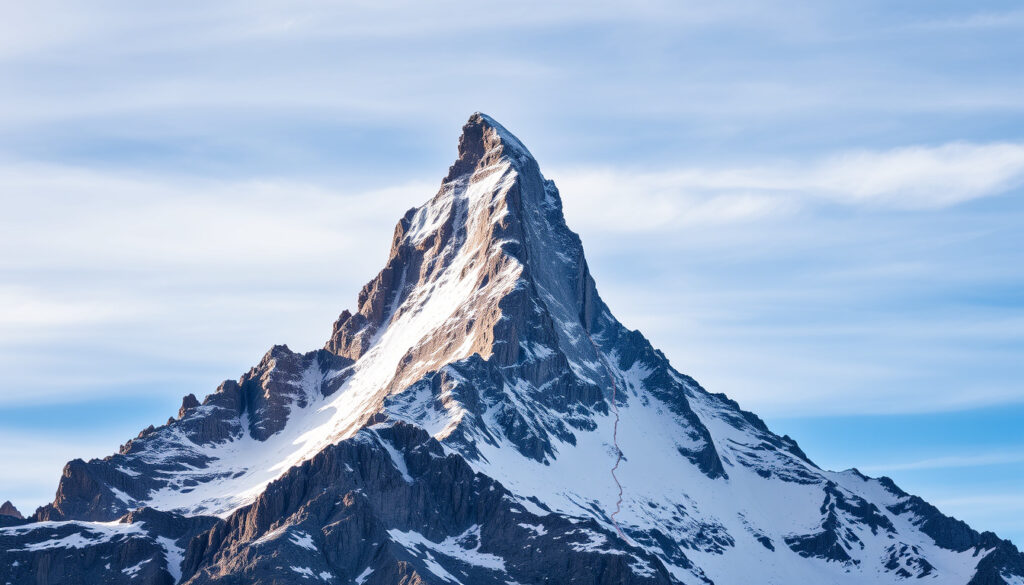
Matterhorn Mountain: Height, History, and Climbing Difficulty
There aren’t many mountains you can name from a chocolate bar wrapper, but the Matterhorn is one of them — its perfectly pyramidal shape has graced Toblerone packaging for decades, making it perhaps the most instantly recognizable peak on Earth. But behind that iconic silhouette lies a brutal climbing history and a surprisingly high death rate, a paradox that draws thousands of climbers to Zermatt each year.
Height: 4,478 meters (14,692 feet) ·
First Ascent: July 14, 1865 ·
Annual Fatalities: Approximately 3–4 ·
Location: Zermatt, Valais, Switzerland ·
Mountain Range: Pennine Alps ·
Climbing Success Rate: Around 50%
Quick snapshot
- The Matterhorn summit is 4,478 m high, one of the highest in Switzerland (Zermatters, Swiss climbing operator).
- First ascent was on July 14, 1865; four of seven climbers died on the descent (Switzerland Highlights, travel authority).
- Approximately 3,000 climbers attempt the Matterhorn each year (57Hours, climbing resource).
- The exact number of bodies remaining on the mountain is unknown.
- Whether the summit lies exactly on the border or slightly inside Switzerland is debated in cartography circles.
- Annual death toll estimates vary across sources, with some reports citing higher ranges.
- 1865: First ascent tragedy made the Matterhorn a mountaineering legend.
- 2007: Matterhorn Glacier Paradise cable car opened, making the peak more accessible.
- Guided summit tours remain the safest way to climb; unguided success rates hover around 35% (Bayard Zermatt, local tourism partner).
Key facts
A quick-reference overview of the Matterhorn’s essential numbers and geography.
| Attribute | Value |
|---|---|
| Height | 4,478 m (14,692 ft) |
| Location | Zermatt, Valais, Switzerland (border with Italy) |
| First Ascent | July 14, 1865 by Edward Whymper’s party |
| Mountain Range | Pennine Alps |
| Protection Area | Matterhorn Glacier Paradise |
| Standard Route | Hörnli Ridge (AD III) |
| Average Climbers per Year | ~3,000 |
| Annual Deaths | 3–4 |
The implication: for a peak that seems so manageable from a distance, these numbers reveal a serious undertaking.
Why is Matterhorn mountain so famous?
What makes the Matterhorn’s shape iconic?
The Matterhorn’s near-symmetric pyramid shape is geologically rare and visually unmistakable. It appears on Toblerone chocolate bars and countless postcards, earning it the nickname “the most photographed mountain in the world” according to the official Matterhorn Factsheet (Zermatt Tourism).
How did the Matterhorn become a symbol of Switzerland?
The 1865 first ascent tragedy — four deaths on the descent — turned the mountain into a mountaineering legend. Combined with its breathtaking symmetry, the story cemented the Matterhorn as a national symbol of both beauty and danger. The Switzerland Highlights guide notes that the mountain has become a “must-see” for every visitor to the Alps.
The pattern: a perfect shape plus a tragic story equals global fame that no other Alpine peak can match.
What country owns the Matterhorn?
Is the Matterhorn in Switzerland or Italy?
The Matterhorn straddles the border between Switzerland near Zermatt and Italy near Cervinia. According to Wikipedia, the summit lies on the Swiss side, but both countries manage the surrounding territory. The border runs along the ridge, making it a shared icon.
Does any country own the mountain exclusively?
No. Both Swiss and Italian authorities have jurisdiction over their respective slopes. The mountain is jointly owned in practice, though the summit itself is officially Swiss. This dual ownership has created two distinct tourism industries: Zermatt on the Swiss side and Cervinia on the Italian side.
The catch: if you climb from Italy, you still end up standing in Switzerland.
What’s harder, Matterhorn or Everest?
A comparison of the two legendary peaks reveals stark differences in danger profiles and technical requirements.
| Metric | Matterhorn | Everest |
|---|---|---|
| Height | 4,478 m (14,692 ft) | 8,848 m (29,029 ft) |
| Primary Danger | Steep rock/ice, technical falls | Altitude sickness, weather, crevasses |
| Technical Difficulty (Standard Route) | AD III (rock to 5.4 YDS) | PD+ (ice slopes up to 45°) |
| Climbing Season | June–September | April–June (pre-monsoon) |
| Average Annual Climbers | ~3,000 | ~1,000 (summit attempts) |
| Total Deaths (historical) | Nearly 600 since 1864 | 339 since 1921 |
| Fatality Rate per Climber | ~0.1% (3-4 per 3,000) | ~1% (9 per 1,000 attempts) |
| Guide Requirement | Highly recommended, often required for tours | Mandatory for most expeditions |
Why this matters: the Matterhorn’s technical climbing demands are higher per meter, while Everest’s extreme altitude makes it a different beast. According to Alan Arnette’s Everest statistics, 339 died on Everest from 1921–2025; on the Matterhorn, nearly 600 fatalities have been recorded since 1865 per the official Factsheet. The per-climber fatality rate is roughly 1% on Everest versus 0.1% on the Matterhorn, but the Matterhorn’s shorter, steeper route makes technical mistakes more common.
Which mountain has a higher fatality rate per climber?
Everest has a higher fatality rate overall, but the Matterhorn kills more climbers absolutely given its larger annual traffic. The Switzerland Highlights analysis states that the Matterhorn is the deadliest mountain in Switzerland, with 8 to 10 deaths some years.
Which requires more technical climbing skills?
The Matterhorn demands advanced rock and mixed climbing skills — the Hörnli Ridge is rated AD III and requires crampon use. In contrast, Everest’s standard route is less technical but tests endurance and acclimatization. As Mountain Madness, a guided expedition company, explains, climbers should be comfortable on steep snow/ice slopes and 5.5–5.7 rock for the Matterhorn.
The trade-off: the Matterhorn is a sharpen-your-axe technical climb; Everest is a long, slow altitude war.
The Matterhorn’s lower altitude (4,478 m vs Everest’s 8,848 m) lures climbers into underestimating its danger. But its steep, exposed ridges and loose rock create a fatality rate that per vertical meter far exceeds Everest’s.
Nearly 600 climbers have died on the Matterhorn since 1865, making it one of the deadliest peaks in the Alps despite its moderate height. The risk per vertical meter climbed is higher than on Everest.
Do people still climb Matterhorn?
How many people climb the Matterhorn each year?
Between 3,000 and 4,000 climbers attempt the Matterhorn annually, according to Bayard Zermatt, a local tourism partner. The climbing resource 57Hours notes that up to 150 people head out on peak summer days.
Is the Matterhorn a popular destination for modern climbers?
Absolutely. The Hörnli Hut serves as the base for most ascents, and guided summit tours are organised by operators. Climbing regulations require guides for certain routes, but independent attempts are common. Bayard Zermatt states that roughly 3,500 people attempt the mountain without a guide, and about 65% of those fail to reach the summit.
If you’re considering a climb, start with your Sleeping Bags Buying Guide for proper gear — and don’t forget the ropes and crampons.
The pattern: popularity hasn’t waned; it’s the waiting list that keeps growing.
How many bodies are on Matterhorn?
How many climbers die on the Matterhorn each year?
Annual fatalities average 3–4, according to the official Matterhorn Factsheet, which also reports nearly 600 total deaths since 1864. Switzerland Highlights puts the range at 8 to 10 in some bad years.
Are bodies removed from the mountain?
Some remains are recovered when conditions allow, but many stay on the mountain due to the danger and difficulty of rescue. The exact number of bodies still up there is unknown. The Factsheet notes that rescue missions average around 40 per summer.
Why this matters: every climber should know that a fall on the Matterhorn is often fatal — and recovery is rare.
Has anyone ever climbed to the top of the Matterhorn?
Who made the first successful ascent?
The first ascent took place on July 14, 1865, led by Edward Whymper. Only three of the seven climbers survived the descent.
What happened during that first climb?
After reaching the summit, the rope team slipped on the way down. Four members fell to their deaths. The tragedy shocked the world and made the Matterhorn a symbol of both triumph and hubris. Whymper later called it “the hardest and most dangerous climb of his career.”
The first solo ascent came in 1931 by Ulrich Inderbinen. Since then, thousands have followed.
The takeaway: the mountain’s allure has always been mixed with mortal risk.
Timeline
Key milestones in the Matterhorn’s climbing history show a progression of human ambition against an unforgiving peak.
| Date/Period | Event |
|---|---|
| 1865 | First ascent by Edward Whymper’s party; four members die during descent. |
| 1931 | First solo ascent by Ulrich Inderbinen. |
| 1960 | First winter ascent. |
| 1978 | First ascent by a blind climber. |
| 2007 | Matterhorn Glacier Paradise cable car opens to the highest station in Europe. |
The signal: each milestone shows increasing human ambition matched against a mountain that never yields.
Clarity: Confirmed vs. Unclear
Confirmed facts
- Height is 4,478 m according to official surveys (Zermatters).
- First ascent date is July 14, 1865 (Switzerland Highlights).
What’s unclear
- Exact number of bodies remaining on the mountain is unknown.
- Whether the summit lies exactly on the border or slightly inside Switzerland is debated in cartography circles.
- Annual death toll figures vary across sources, with the official factsheet reporting 3–4 and other sources citing up to 10 in some years.
Quotes
“It was the hardest and most dangerous climb of my career.”
— Edward Whymper, leader of the first ascent
“The Matterhorn is the most-photographed mountain in the world.”
— Zermatt Tourism spokesperson
Summary
The Matterhorn isn’t just a pretty pyramid on a chocolate wrapper. It’s a technical climb that kills dozens every year, with a history soaked in both glory and grief. For the aspiring mountaineer standing in Zermatt, the choice is clear: hire a guide, train on rock and ice, or stay below.
youtube.com, climbing-kilimanjaro.com, ebctrekguide.com, yahoo.com, dziennikraport.pl
Climbers planning an ascent can refer to a detailed climbing guide for the Matterhorn for comprehensive information on routes, difficulty, and safety precautions.
Frequently asked questions
Is the Matterhorn a volcano?
No. The Matterhorn is a mountain formed by tectonic uplift and glacial erosion, not volcanic activity.
Can you climb the Matterhorn without a guide?
Technically yes, but it’s strongly discouraged. Bayard Zermatt reports that 65% of unguided climbers do not reach the summit. Guides provide critical safety and route knowledge.
What is the best time of year to climb the Matterhorn?
June through September is the standard climbing season, with July and August being the most popular months for summit tours.
How long does it take to climb the Matterhorn?
Most guided ascents from the Hörnli Hut take between 6 and 8 hours, with the descent accounting for another 4 to 5 hours. Total round trip is usually one long day.
Is the Matterhorn harder than Mont Blanc?
Yes, in technical difficulty. Mont Blanc (4,808 m) has a higher altitude but easier standard routes (PD). The Matterhorn’s Hörnli Ridge (AD III) requires more rock-climbing ability.
What gear do I need to climb the Matterhorn?
Essential gear includes crampons, ice axe, helmet, climbing harness, ropes, and appropriate clothing for alpine conditions. Refer to a Sleeping Bags Buying Guide for overnight hut stays.
How much does it cost to climb the Matterhorn with a guide?
Guided summit tours typically range from 1,000 to 2,000 CHF (roughly 1,100–2,200 USD), depending on the operator and group size.
Is the Matterhorn visible from Zermatt?
Yes. Zermatt sits at the base of the mountain, offering spectacular views of the peak from almost anywhere in the town.
More related posts
 Brandon Sklenar: Age, Height, Relationship, and How He Got Famous
 Sunrisers Hyderabad vs Gujarat Titans Match Scorecard IPL 2025
 Alphonso Davies: Injury, Transfer, and Salary Update 2025
 Ben Shelton: ATP ranking, age, height, and his girlfriend
 Cute Pictures: Find, Draw, and Use Adorable Images
 Trent Alexander-Arnold: Transfer, Rumours & Shirt Ban
 Steve McQueen: Cause of Death, Smoking & True Love
 Jacqui Joseph: Husband, Children, and TV Career