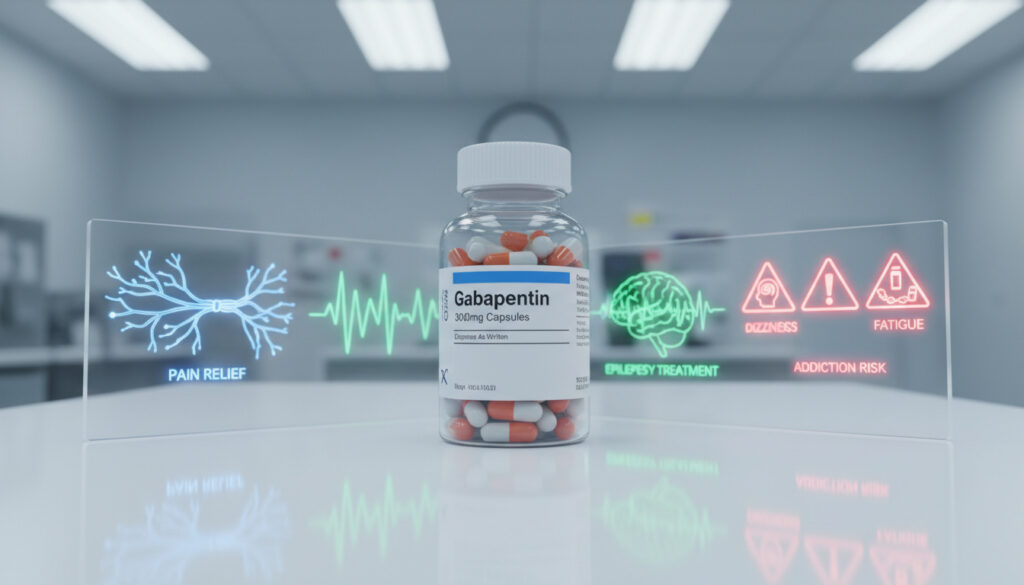
What Is Gabapentin Used For – Uses, Side Effects & Risks
Gabapentin, marketed under brand names including Neurontin, represents one of the most widely prescribed anticonvulsant medications in the United States. First approved by the FDA in 1993, this gamma-aminobutyric acid (GABA) analog was initially developed for epilepsy management but has since expanded into a broad spectrum of neurological and pain-related applications.
Despite its chemical similarity to GABA, gabapentin does not interact directly with GABA receptors. Instead, it binds to calcium channel subunits in the central nervous system, modulating neurotransmitter release. This mechanism underlies both its therapeutic effects and its growing association with misuse potential, prompting recent regulatory scrutiny at the state level.
What Is Gabapentin Used For?
| Approved Uses | Brand Names | Drug Class | Common Forms |
|---|---|---|---|
| Partial seizures, Postherpetic neuralgia, RLS | Neurontin, Horizant, Gralise | Anticonvulsant (GABA analog) | Capsules, tablets, oral solution (100-800mg) |
Clinical utilization of gabapentin spans both regulated indications and off-label prescribing patterns. Understanding the distinction between FDA-approved applications and emerging therapeutic uses remains essential for informed medical decision-making.
- FDA-approved for partial seizures, postherpetic neuralgia, and moderate-to-severe restless legs syndrome
- Off-label prescribing for neuropathic pain and anxiety remains common despite limited controlled evidence
- Not a narcotic or opioid, though often misused to enhance opioid effects or induce euphoria
- Subject to Schedule V classification in multiple states due to documented abuse potential
- Available in 100-800mg formulations with variable absorption rates depending on dosage
| Attribute | Details |
|---|---|
| Generic Name | Gabapentin |
| Brand Names | Neurontin, Horizant, Gralise |
| FDA Approval Year | 1993 |
| Drug Class | Anticonvulsant / GABA analog |
| Schedule Status | Not federally controlled; Schedule V in some states |
| Half-Life | 5-7 hours |
| Standard Dosage Forms | 100mg, 300mg, 400mg, 600mg, 800mg |
| Primary Mechanism | Alpha-2-delta calcium channel binding |
What Are the Side Effects of Gabapentin?
Adverse effects range from transient discomfort to potentially life-threatening complications. Frequency and severity often correlate with dosage titration schedules and individual patient factors including age and comorbid respiratory conditions.
Does Gabapentin Cause Weight Gain?
Weight gain occurs in approximately 6-11% of patients according to clinical surveillance data. This effect frequently coincides with peripheral edema involving the hands, feet, and ankles. The mechanism involves fluid retention rather than pure adipose tissue accumulation, though metabolic changes may contribute.
Does Gabapentin Make You Sleepy?
Drowsiness and somnolence represent the most frequently reported adverse effects, affecting 15-20% of users in clinical trials. Dizziness occurs in 10-18% of cases. These central nervous system depressant effects typically manifest during initial titration periods and may diminish with continued administration.
Additional common reactions include ataxia, fatigue, headache, nausea, vomiting, dry mouth, and blurred vision. Children may exhibit mood or behavioral changes distinct from adult presentations.
Concomitant use with opioids significantly increases the risk of respiratory depression and hypoventilation, particularly in older adults or those with COPD. Clinical monitoring is essential when combining these agents.
Serious adverse events warranting immediate medical attention include myopathy, visual field deficits, suicidal ideation, angioedema, and multiorgan hypersensitivity reactions (DRESS). Abrupt discontinuation risks seizure recurrence and withdrawal syndromes characterized by anxiety, agitation, and cardiac irregularities.
Is Gabapentin a Narcotic or Controlled Substance?
Why Is Gabapentin a Controlled Substance?
Gabapentin is not a narcotic and possesses no intrinsic opioid receptor activity. Federally, it remains unscheduled under the Controlled Substances Act. However, pharmacovigilance data revealing misuse patterns for euphoria, opioid withdrawal mitigation, and methadone enhancement prompted multiple states to enact Schedule V classifications between 2019 and 2024.
Is Gabapentin the Same as Neurontin?
Neurontin constitutes the original proprietary brand name for gabapentin. The generic formulation contains identical active pharmaceutical ingredients and bioequivalence parameters. Pfizer developed the original compound, though numerous generic manufacturers now produce equivalent formulations.
Comparative analysis with pregabalin (Lyrica) reveals important distinctions. Both agents belong to the gabapentinoid class and share indications for neuropathic pain and seizures. However, pregabalin demonstrates higher abuse potential, resulting in federal Schedule V classification and more consistent pharmacokinetic absorption profiles. Gabapentin exhibits dose-dependent absorption limitations not present with pregabalin.
While the federal government does not classify gabapentin as a controlled substance, multiple states have enacted Schedule V classifications in response to increasing reports of misuse and diversion.
What Should You Not Take with Gabapentin?
How Long Does It Take for Gabapentin to Work?
Therapeutic onset varies by indication. Anticonvulsant effects for partial seizures and restless legs syndrome modulation may manifest within days of achieving therapeutic plasma concentrations. Conversely, neuropathic pain relief typically requires one to two weeks of titrated dosing to achieve clinical efficacy.
Can You Overdose on Gabapentin?
Overdose toxicity presents as severe somnolence progressing to respiratory failure and cardiac arrhythmia. Unlike opioid antagonists, no specific reversal agent exists for gabapentin intoxication. Emergency intervention focuses on supportive care including airway maintenance and hemodynamic stabilization.
Pharmacological interactions require particular vigilance. Opioids including morphine and codeine produce additive central nervous system depression. Concurrent sedative-hypnotics such as clonazepam, amitriptyline, and cyclobenzaprine amplify dizziness and respiratory compromise. Ethanol consumption potentiates these effects substantially.
Aluminum or magnesium-containing antacids reduce gabapentin absorption by approximately 20%. Administer gabapentin at least 2 hours after antacid consumption to maintain therapeutic levels.
Additional contraindications include myasthenia gravis and myoclonus. Caffeine, losartan, and phenytoin may alter pharmacokinetic profiles necessitating dosage adjustments.
Gabapentin Development and Regulatory Milestones
- : FDA grants initial approval for adjunctive treatment of partial seizures in epilepsy
- : Regulatory indication expands to include postherpetic neuralgia management
- : Gralise formulation receives approval for once-daily dosing in postherpetic neuralgia
- : Multiple state jurisdictions implement Schedule V controlled substance classifications amid rising diversion statistics
Established Evidence vs. Uncertain Applications
| Established Indications | Uncertain or Investigational Uses |
|---|---|
|
|
Pharmacological Mechanism and Prescribing Trends
Gabapentin functions as a selective calcium channel blocker, specifically binding to the alpha-2-delta subunit of voltage-gated calcium channels in the central nervous system. This molecular interaction reduces the release of excitatory neurotransmitters including glutamate, norepinephrine, and substance P, thereby dampening neuronal hyperexcitability associated with seizure disorders and neuropathic pain states.
Prescribing patterns have shifted dramatically since 2010, with off-label use for chronic pain syndromes increasing substantially. Harvard Medical School notes that while evidence supports use in diabetic neuropathy and postherpetic neuralgia, efficacy for nonspecific chronic pain remains variable. The medication’s role in 34 perimenopause symptoms management continues to generate clinical debate, particularly regarding hormonal interaction mechanisms.
Clinical Authority and Expert Perspectives
Gabapentin is not a narcotic and is not federally scheduled, but recent data suggest it carries significant abuse potential, particularly when combined with opioids.
— NIH/PMC Research Analysis
Common side effects include drowsiness, dizziness, and weight gain. More serious risks involve respiratory depression when combined with opioid medications.
Patients should not stop taking gabapentin suddenly, as this may trigger seizures or withdrawal symptoms including anxiety and irregular heartbeat.
Key Considerations for Patients and Providers
Gabapentin remains a valuable therapeutic tool for epilepsy, postherpetic neuralgia, and restless legs syndrome, though its off-label application requires careful risk-benefit analysis. The medication’s non-opioid status belies genuine misuse potential and dangerous interactions with central nervous system depressants. Patients should maintain consistent dosing schedules, avoid abrupt discontinuation, and discuss all concurrent medications—including over-the-counter antacids—with their prescriber. Understanding What does 67 mean in clinical contexts may provide additional insight into pharmaceutical coding systems.
Frequently Asked Questions
What is gabapentin 300 mg used for?
The 300mg formulation treats partial seizures, postherpetic neuralgia, and restless legs syndrome. It represents a standard maintenance dose for many adult patients.
Is gabapentin used for anxiety?
Anxiety treatment is off-label. Limited clinical data suggest potential benefit for generalized anxiety disorder, but FDA approval does not cover this indication.
Does gabapentin help you sleep?
Drowsiness is a common side effect rather than a primary indication. While some patients report improved sleep, prescribing specifically for insomnia remains off-label.
Is gabapentin used for back pain?
Chronic lower back pain may be treated off-label as an adjunct therapy, though evidence quality varies and it is not FDA-approved for this condition.
What is gabapentin prescribed for?
Physicians prescribe gabapentin for FDA-approved conditions including epilepsy and postherpetic neuralgia, plus off-label uses like neuropathic pain and anxiety management.
Can gabapentin cause withdrawal symptoms?
Abrupt discontinuation after high-dose or long-term use may cause withdrawal including anxiety, agitation, and irregular heartbeat. Tapering is recommended.
More related posts
 Small Double Bed with Mattress: Compact Comfort Solutions
 Jenny Agutter: Age, Husband, Net Worth, and Movies
 How to Get Super Glue Off Skin: Fast, Safe Methods
 Robert Redford: Health, Life & Legacy Facts vs Rumors
 Sky Sports F1 Schedule – Full 2024 UK Race Times & Coverage
 How Long Is a Rugby Match? 80-Minute Duration Explained
 Is This Car Taxed? Check Vehicle Tax Ireland Online
 Euro Pound Exchange Rate: Today’s Live EUR to GBP Rate