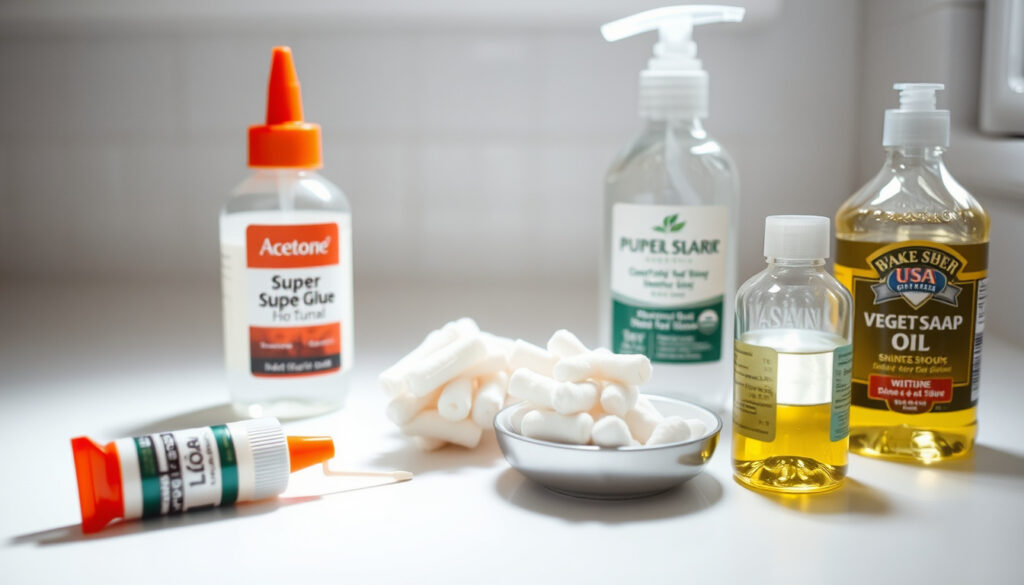
How to Get Super Glue Off Skin: Fast, Safe Methods
A single misplaced squeeze of super glue bonds skin to itself in seconds — but removal is straightforward. Acetone dissolves the bond fastest (20 seconds), while gentler options like Vaseline or warm soapy water work without harsh chemicals. The method you choose depends on how quickly you act and whether your skin is sensitive.
Common solvents: Acetone, isopropyl alcohol · Home remedies tested: Vaseline, salt, toothpaste · Toxicity level: Low for skin contact · Fastest method: Acetone soak (20 seconds) · Sources reviewed: Healthline, GoodRx, Adhesive Guru
Quick snapshot
- Acetone dissolves super glue fastest GoodRx
- Warm soapy water is the safest first step Adhesive Guru
- Toothpaste efficacy varies by brand and formula
- Healthline article updated July 2025 Healthline
- Pick the method that matches your skin sensitivity
23 documented removal methods exist across household and commercial products — but only a handful work well on skin without causing irritation.
| Method | Key detail |
|---|---|
| Primary remover | Acetone GoodRx |
| Home alternative | Vaseline or salt Adhesive Guru |
| Skin toxicity | Minimal Medical News Today |
| Time estimate | 20 seconds to 5 minutes |
How do you get dried super glue off skin?
The approach depends on how long the glue has had to set. Fresh spills respond best to warm soapy water, while dried glue typically requires a solvent to break the bond.
“One of the simplest and safest ways to remove super glue from your skin is by soaking the affected area in warm, soapy water.”
— Adhesive Guru, Adhesive removal specialist
Soak in warm soapy water
If you catch it early, plain warm soapy water may be all you need. According to Adhesive Guru, soaking the affected area for 15–20 minutes softens the adhesive enough that rubbing gently with your fingers starts to lift the edges. The moment you can peel the skin apart, stop — forcing it can tear your skin and cause more damage than the glue itself.
Use acetone or nail polish remover
Acetone is a solvent that breaks down super glue, and it works fast — often within 20 seconds of application. GoodRx notes that most nail polish removers contain enough acetone to do the job. Apply it with a cotton ball, let it sit for a minute, then gently rub. Medical News Today warns against using acetone on broken or injured skin, and it should never be applied inside the nose or mouth. People with eczema or dry skin conditions may notice increased irritation after use.
“Acetone is a solvent that breaks down super glue. So, try applying acetone or nail polish remover that contains acetone to the affected area.”
— GoodRx Health, Medical information provider
Apply petroleum jelly
Vaseline softens super glue slowly but without the drying effects of acetone. Rub it into the affected area for about 20 seconds, then attempt to peel the glue away. GoodRx confirms petroleum jelly works by breaking down the adhesive bond — it’s painless and chemical-free, making it ideal for sensitive skin or quick touch-ups.
For fresh super glue on intact skin, warm soapy water is often enough. Once the glue has dried, acetone delivers the fastest results but demands thorough washing and moisturizing afterward.
Does Vaseline remove super glue from skin?
Yes — and it does so without the skin-drying side effects that come with acetone. Vaseline (petroleum jelly) works by gradually softening the adhesive, allowing you to peel away the glue once the bond loosens.
How to apply Vaseline
Work a generous amount of petroleum jelly into the glued area using circular motions. You don’t need to scrub — just let it sit and penetrate. Adhesive Guru notes that oils in general, including coconut oil and olive oil, help break down super glue by degrading the cyanoacrylate bond.
Step-by-step removal
- Apply a thick layer of Vaseline directly over the super glue
- Wait 5–10 minutes without wiping it off
- Rub gently in circles — the glue should start to lift
- Peel away the softened glue carefully
- Wash the area with soap and water to remove residue
This method takes longer than acetone but is gentler on skin. It’s particularly useful for children or anyone with skin sensitivities.
The implication: Vaseline trades speed for gentleness — budget 10–15 minutes versus acetone’s 20 seconds, but your skin will thank you.
What will remove dried super glue?
Dried super glue requires more than soaking alone. The adhesive has fully cured, so you need either a chemical solvent or gentle abrasion to break it down.
Salt and water scrub
Coarse salt acts as a mild abrasive when mixed with water. Apply the paste to wet skin and rub gently — the mechanical action combined with the moisture helps lift dried residue. Dermatologist-approved demonstrations suggest this works best for thin layers of dried glue rather than thick clumps.
Toothpaste method
Toothpaste contains mild abrasives that can wear down dried glue residue, though results vary depending on the brand and how thick the glue layer is. This method works best as a follow-up after other removal techniques have already loosened the bulk of the adhesive.
Isopropyl alcohol
Isopropyl alcohol isn’t as strong as acetone but can still help break down super glue. Apply it with a cotton ball and let it sit for a few minutes before attempting removal. Lowe’s notes that acetone remains the most reliable option for dried glue on skin, but isopropyl alcohol serves as a workable alternative when acetone isn’t available.
A pumice stone or nail file can help scrape off hardened glue, but Medical News Today cautions against using a pumice stone on sensitive skin or the face. Stick to gentler methods for those areas.
The pattern: Dried glue always needs either a solvent or abrasion — soaking alone rarely suffices once the adhesive has fully cured.
How toxic is super glue on skin?
For normal skin contact, super glue carries minimal toxicity. The Ontario Poison Centre classifies it as low-risk for topical exposure, and Medical News Today confirms that dried super glue on skin is not dangerous — unless it gets inside the body.
Short-term contact risks
Fresh liquid super glue can cause minor irritation or a burning sensation on contact. Once it dries, the risk drops significantly. GoodRx warns that acetone — often used to remove the glue — can itself dry out and irritate skin, so washing and moisturizing after use is essential.
Dried glue safety
Healthline notes that if a rash develops or the glue remains stuck for more than a couple of days, it’s time to consult a doctor. Super glue removers, whether commercial or household, work best when used promptly. The longer you wait, the more you may need mechanical abrasion, which increases skin irritation risk.
“Acetone is potentially toxic and can dry out and irritate the skin, so it is vital to wash the hands thoroughly afterward.”
— Medical News Today, Medical publication
The implication: Super glue itself poses low risk, but the removal chemicals (especially acetone) demand respect — wash and moisturize after every use.
What is the fastest way to get super glue off your hands?
If speed is the priority, acetone wins every time. Applied correctly, it breaks down the bond in as little as 20 seconds.
Acetone soak
- Grab nail polish remover (check the label for acetone)
- Soak a cotton ball and press it against the glued area
- Wait 20–60 seconds — the glue should start to dissolve
- Rub gently to lift the residue
- Wash hands thoroughly with soap and warm water
- Apply moisturizer — acetone dries skin significantly
Without chemicals
If you want to avoid acetone entirely, the coconut oil and baking soda method offers a chemical-free alternative. Mix equal parts coconut oil and baking soda into a paste, apply it to the glued area, and let it soak for 10–15 minutes before rubbing gently. Family Handyman documents this approach as effective for removing super glue from skin without harsh solvents.
How to remove super glue from sensitive areas
Skin-to-skin contact (fingers stuck together, lips, or eyelids) requires extra care. Never force the bond apart.
Skin bonded to skin
Soak in warm soapy water for 15–20 minutes, then gently work a blunt object (like a spoon or butter knife wrapped in cloth) between the bonded surfaces. Do not yank or pull — Medical News Today emphasizes that forcing glued skin apart can tear the skin and cause lacerations.
Special considerations for lips and face
Avoid acetone near the mouth or eyes. GoodRx specifically warns that acetone should never be used inside the body. For lips or the area around eyes, stick to food-safe oils — peanut butter, vegetable oil, or olive oil — applied gently and allowed to sit before wiping away. Aron Alpha documents these as suitable alternatives for sensitive areas where chemical solvents aren’t appropriate.
If super glue contacts the eye, flush with water immediately and seek medical attention. Do not attempt to peel it off the eyeball. Acetone and superglue fumes can irritate eyes and lungs — work in a well-ventilated space.
The catch: Sensitive areas demand oil-based methods only — acetone belongs nowhere near the mouth, eyes, or damaged skin.
Related reading: Trapped Nerve in Neck – Symptoms, Causes, Treatments · What Are the 34 Symptoms of Perimenopause – Stages, Timeline and Relief
Many of the same gentle techniques for super glue also effectively handle hair dye stains from skin, using oils or solvents to avoid irritation.
Frequently asked questions
How long does super glue stay on skin?
Super glue typically loosens within 1–5 days through natural skin shedding, but using removal methods speeds up the process. The longer it stays on, the more likely you’ll need mechanical abrasion to fully remove residue.
Can super glue cause burns?
Super glue itself doesn’t cause burns, but attempting to force bonded skin apart can tear the skin and cause cuts. Medical News Today notes that acetone can cause chemical burns if used on broken or injured skin.
What if super glue gets in eyes?
Flush the eye with clean water immediately and seek emergency medical care. Do not use acetone or any solvent near the eyes. Medical News Today specifically warns against using acetone inside the body or near mucous membranes.
Is super glue remover safe?
Commercial super glue removers are effective but can be flammable and produce strong fumes. GoodRx recommends using them in a well-ventilated area. They work faster than household methods but carry more irritation risk for sensitive skin.
How to prevent super glue accidents?
Work in a well-lit area, apply glue sparingly, keep caps on tightly, and avoid using your fingers as applicators. Use applicator tips or small brushes for precise application.
Does oil remove super glue?
Yes — coconut oil, olive oil, baby oil, and Vaseline all help break down the adhesive bond. They work more slowly than acetone but are gentler on skin and safe for sensitive areas.
What not to use on super glue skin?
Don’t use excessive force to peel glue away — this tears skin. Avoid pumice stones on sensitive skin or the face. Don’t apply acetone to broken skin or inside the body. Never use sharp objects to pry bonded skin apart.
More related posts
 Salt Bae Downfall: Net Worth Loss and Restaurant Closures
 Dame Kelly Holmes: Biography, Net Worth, Army Rank, Relationship, and Health
 US Dollars to Pounds: Live USD to GBP Rate
 Derek Chisora: Record, Losses, Last Fight & Career Highlights
 Spencer Matthews: Net Worth, Wife, Sobriety & Royal Family Link
 Blue Ivy Carter: Age, Grammy Win, Siblings & Facts
 Declan Donnelly: Biography, Health, Family, and Recent News
 James Gunn: From Guardians of the Galaxy to DC Studios