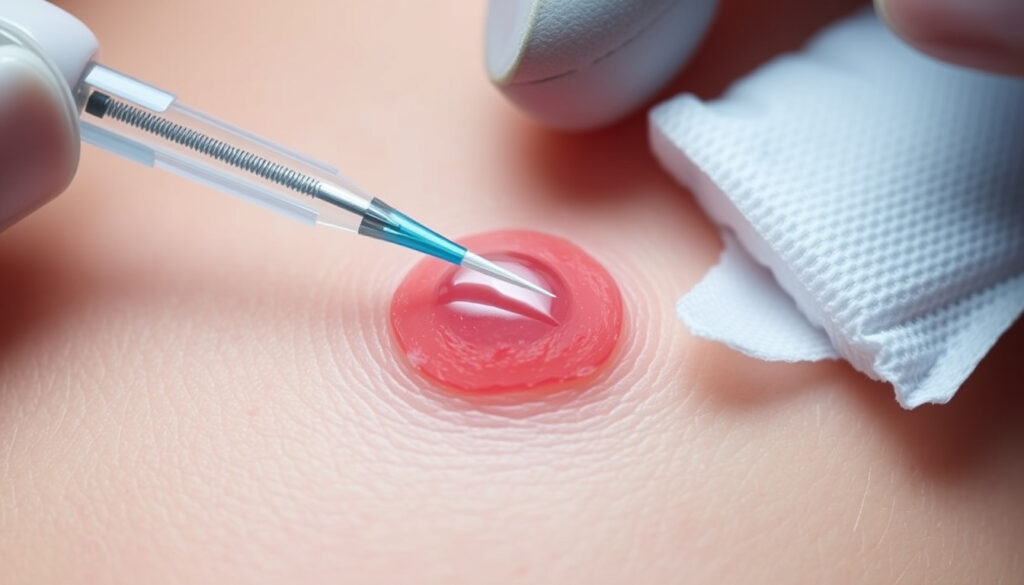
Should You Pop a Blister? Expert Advice & Safe Drainage Steps
Few minor injuries spark as much debate as a blister. The answer depends on where it is, how painful it is, and what caused it – this article breaks down the evidence so you can make the right call for your skin.
Typical healing time without popping: 3 to 7 days ·
Infection risk if popped: increased significantly ·
Blister fluid composition: serum (clear fluid) or blood ·
Recommended action for most blisters: leave intact and cover
Quick snapshot
- Increases infection risk (Cleveland Clinic)
- Slows healing (GoodRx)
- Can cause more pain (GoodRx)
- Severe pain that limits activity (Nationwide Children’s Hospital)
- Large or tense blister (Bass Medical Group)
- Sterile technique is used (Nationwide Children’s Hospital)
- Wash hands and blister area (Bass Medical Group)
- Use a sterilized needle (Bass Medical Group)
- Drain without removing roof (Nationwide Children’s Hospital)
- Apply antibiotic ointment and cover (WebMD)
The takeaway: each scenario has a clear recommended action based on evidence.
Four key facts summarise the science behind blister management.
| Aspect | Fact |
|---|---|
| Healing time | 3-7 days if left intact (Savlon) |
| Fluid composition | Serum (clear) or blood (WebMD) |
| Infection risk | Low if intact; high if popped and not cared for (Cleveland Clinic) |
| Best first aid | Clean, cover, don’t pop (Nationwide Children’s Hospital) |
Is it better to leave blisters alone or pop them?
General medical advice leans strongly toward leaving them intact. But not all blisters are the same. Location, size, and cause change the equation.
Do blisters heal faster if you pop them?
- No – leaving a blister intact speeds healing because the fluid keeps the underlying skin clean and reduces infection risk (Cleveland Clinic).
- Popping draws out the process and can increase pain (GoodRx).
The very fluid you want to drain is what your body uses to rebuild the skin beneath. Letting it sit means faster repair.
Should you pop blisters on feet?
- Most foot blisters should be left alone, especially small ones (Nationwide Children’s Hospital).
- If the blister is on a weight-bearing spot and extremely painful, some clinicians advise draining with a sterile needle at the edge (Bass Medical Group).
Should you pop a burn blister?
- Never pop a burn blister – the fluid protects the damaged skin underneath (Bass Medical Group).
- Burns have a higher infection risk, and breaking the blister can lead to scarring (WebMD).
The trade-off: For everyday friction blisters, leaving them intact gives you a shorter healing window. For feet, the pain of walking may justify a careful drain, but burns are off-limits.
What happens if I don’t pop my blister?
The body has its own quiet disposal system.
Where does the liquid go in a blister?
- The clear fluid (serum) is gradually reabsorbed into surrounding tissue over several days (Savlon).
- The blister roof stays intact, forming a natural bandage that blocks bacteria (Nationwide Children’s Hospital).
Will a blister pop on its own?
- Yes, especially if friction continues. When it bursts, clean the area with soap and water and leave the top layer of skin in place (Nationwide Children’s Hospital).
- Keep the area covered to prevent infection while the new skin forms underneath.
Why this matters: Your blister is essentially a built-in healing chamber. Letting it drain naturally on its own timeline is almost always safer than accelerating the process yourself.
What liquid is in a blister?
- Clear fluid is serum – the liquid part of blood without red cells or clotting factors (WebMD).
- Blood in a blister signals a deeper injury, often from a pinch or crush (Cleveland Clinic).
- This fluid cushions the damaged skin and delivers cells needed for repair.
If the fluid turns white, yellow, or thick, or begins to smell, the blister may already be infected and needs medical attention (WebMD).
Identifying the fluid type helps assess injury severity.
How long do blisters stay filled with fluid?
Most intact blisters resorb their fluid within 3 to 7 days (Savlon). Weight-bearing blisters on feet may take a little longer.
What heals a blister quickly?
- A moist wound environment, such as a hydrocolloid dressing (e.g., Compeed), speeds healing (Savlon).
- Avoiding continued friction and keeping the blister clean are critical.
- Changing dressings daily helps monitor for infection (WebMD).
What this means: A covered blister in a low-friction spot heals about as fast as the body can manage. Force-draining it usually resets the clock.
Should you pop a blister if you have to walk on it?
This is the one scenario where draining can be justified – when the blister is so painful it alters your gait.
Should you pop blisters on toes?
- Toe blisters are often under constant pressure from shoes. If large and tense, draining may relieve pain (Bass Medical Group).
- Use sterile technique and don’t remove the roof.
Should you pop a blister on your heel?
- Heel blisters are commonly caused by ill-fitting shoes. Leaving them intact is still preferred, but if walking is unbearable, a careful drain with a donut-shaped cushion afterward can help.
- After draining, apply antibiotic ointment and cover with a bandage (WebMD).
The catch: Draining a foot blister relieves pressure but introduces a small infection window. If you have diabetes, circulation problems, or a weakened immune system, do not drain it yourself – see a doctor (Bass Medical Group).
Two scenarios, one pattern: blisters left intact heal faster with lower risk, but when pain prevents normal movement a sterile drain can be a pragmatic exception.
| Factor | Leave intact | Pop (safe method) |
|---|---|---|
| Healing time | 3–7 days | 7–14 days (Savlon) |
| Infection risk | Very low | Moderate if aftercare is proper (Cleveland Clinic) |
| Pain relief | Persistent pressure pain | Immediate relief once drained |
| Aftercare needed | Minimal (cover and leave) | Daily dressing changes and monitoring (WebMD) |
Upsides
- Can relieve severe pain from a tense blister (Bass Medical Group)
- Allows you to continue walking or wearing shoes in the short term
- Reduces pressure on surrounding skin
Downsides
- Slows overall healing time (GoodRx)
- Increases infection risk, especially if sterile technique isn’t used (Cleveland Clinic)
- Can cause more pain if the blister roof is torn or the area becomes inflamed
How to drain a blister safely
If you’ve decided to drain, follow these steps exactly to minimise risk.
- Wash your hands and the blister area thoroughly with soap and water (Bass Medical Group).
- Sterilise a needle with rubbing alcohol or a flame, then let it cool.
- Puncture the blister near the edge, not the centre, to allow fluid to drain while keeping the roof intact (Nationwide Children’s Hospital).
- Gently press the fluid out with a sterile gauze pad.
- Apply antibiotic ointment and cover with a bandage (WebMD).
- Change the dressing daily and watch for signs of infection: redness, warmth, pus, or red streaks (Nationwide Children’s Hospital).
If the blister fluid is white, yellow, thick, or smelly, the blister is already infected. Do not drain it yourself – seek medical care (WebMD).
Proper sterile technique minimizes the risks of drainage.
Clarity: What’s confirmed and what’s still unclear
Confirmed facts
- Blisters heal faster when left intact (Cleveland Clinic).
- Blister fluid is serum or blood (WebMD).
- Popping increases infection risk (Cleveland Clinic).
- Signs of infection include pus, red warm skin, and red streaks (Nationwide Children’s Hospital).
What’s unclear
- Exact rate of fluid reabsorption varies by individual (Savlon).
- Optimal time to drain if needed is not strictly defined – some clinicians offer general guidance, but no universal rule exists.
The evidence supports leaving blisters intact, but individual variation means personal judgment is needed.
Expert perspectives on blister care
“You shouldn’t try to burst a blister yourself. If a blister bursts, don’t peel off the dead skin – leave it in place to protect the new skin underneath.”
NHS (UK national health service)
“Popping a blister usually draws out the healing process and increases the risk of infection.”
Healthline (medical review)
The message from both clinicians is clear: for most blisters, hands off is the hands-down winner. Popping should be the exception, not the rule.
If you’re dealing with a foot blister that makes walking miserable, or if you’ve noticed signs of an Athlete’s Foot: Causes, Symptoms, and Treatment infection alongside, it’s worth checking in with a healthcare professional. And if a blister breaks while you’re active, knowing How to Get Super Glue Off Skin: Fast, Safe Methods first aid can come in handy – but that’s a different kind of adhesive.
For anyone facing a painful blister, the choice is clear: leave it alone unless the pain is unbearable. In that case, a careful, sterile drain followed by diligent aftercare can get you back on your feet – but never at the expense of infection prevention.
Frequently asked questions
Should I pop a blister if it hurts?
Only if the pain is severe enough to limit daily activities. Otherwise, leave it intact. If you must drain, use sterile technique (Bass Medical Group).
Can I pop a blister with a needle?
Yes, but only after sterilising the needle and the blister area. Puncture near the edge and keep the roof of the blister in place (Nationwide Children’s Hospital).
What if my blister pops on its own?
Clean the area gently with soap and water, leave the top layer of skin in place, and cover with a bandage. Change dressing daily (Nationwide Children’s Hospital).
Is it safe to pop a blister on my foot?
Small foot blisters are best left alone. Large, painful ones may be drained if you use sterile technique and cover the area afterward. People with diabetes or poor circulation should not pop foot blisters themselves (Bass Medical Group).
How do I know if a blister is infected?
Signs include pus, red and warm skin around the blister, red streaks leading away, and thick or smelly fluid. Seek medical attention if these appear (Nationwide Children’s Hospital).
What should I put on a blister after popping?
Apply an antibiotic ointment and cover with a sterile bandage. Use a hydrocolloid dressing for extra protection and faster healing (WebMD).
Do blood blisters need different care?
Yes – blood blisters indicate deeper tissue damage. Do not pop them. Elevate the area and apply ice to reduce swelling. See a doctor if the blister is very large or if you have circulatory problems (Cleveland Clinic).
More related posts
 Melissa Roxburgh: Biography, Scars, Relationship Status & Career
 Robert Wagner: Biography, Mystery, and Latest Updates
 Crysencio Summerville: Transfer Fee, West Ham Wage & Injury
 Anna Faris: Biography, Divorce, Son, and Net Worth
 Sarah Smith BBC Journalist: Age, Husband, Net Worth
 Zac Efron Iron Claw – Transformation and True Story
 Arvid Lindblad: Ethnicity, Family, Net Worth & F1 Career
 Los Mochis Liverpool Street – Menu, Hours, Reviews Guide