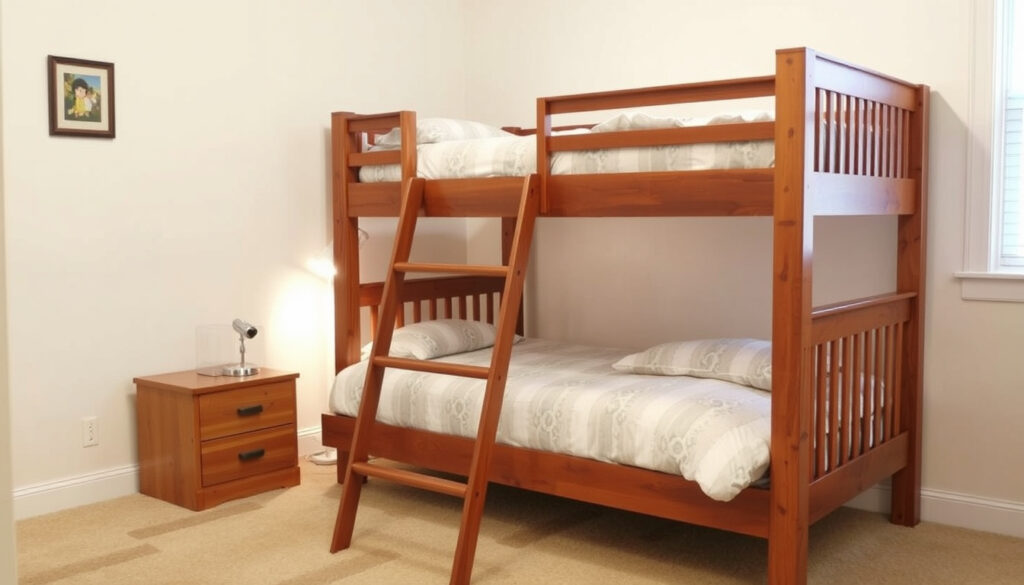
Bunk Beds Age Guide & Safety Tips for Parents
If you’re a parent in Ireland shopping for bunk beds, you’ve probably already noticed that safety advice can feel scattered between different sources. One question keeps coming up: what age is safe for that top bunk? This guide pulls together official recommendations from consumer regulators and paediatric bodies, compares the rules across countries, and helps you decide what works for your family.
Top bunk minimum recommended age: 6 years (CPSC, AAP) ·
Children under 6 on top bunk: Not recommended due to fall risk ·
Bunk bed injury rate (US): Over 36,000 ER visits per year involving children younger than 15 (CPSC) ·
Standard top bunk weight limit: 200–250 lbs (varies by model) ·
Bunk bed types in Ireland: Wooden, metal, triple, loft, with desk options
Quick snapshot
- Top bunk: 6+ years (CCPC (Ireland consumer protection))
- Bottom bunk: any age with supervision and guardrails (CCPC (Ireland consumer protection))
- Avoid top bunk for children under 6 (CCPC (Ireland consumer protection))
- Use guardrails on top bunk
- Ensure proper mattress fit
- Secure ladder to frame
- Check for gaps and sharp edges
- Material: wood vs. metal
- Weight capacity
- Ceiling height
- Room size and layout
- Des Kelly Interiors
- OGEL Beds
- Bunkbed.ie
- Harvey Norman
- Bargaintown
The table below summarises the key specifications every Irish parent should know before buying a bunk bed.
| Attribute | Value |
|---|---|
| Top bunk minimum age | 6 years (CPSC, AAP) |
| Bottom bunk minimum age | No strict guideline; supervision needed for under 6 |
| Common injury mechanism | Falls from top bunk |
| Max weight typical top bunk | 200–250 lbs |
| Standard bunk bed mattress size | Twin 39″ x 75″ |
| Irish safety standard | IS EN 747-1:2012 |
The implication: age and weight limits are the two non-negotiable safety factors for any bunk bed purchase.
What is an appropriate age for a bunk bed?
Can a 2 year old go in a bunk bed?
No. A 2-year-old lacks the coordination and awareness to safely use a bunk bed, even on the bottom bunk without proper guardrails. The Competition and Consumer Protection Commission (CCPC, Ireland’s consumer safety regulator) warns that children under 6 should not sleep on the top bunk. For infants and toddlers, the risks of falls and entrapment are simply too high.
Can a 3 year old use a bunk bed?
Three-year-olds should not use a top bunk. The American Academy of Pediatrics (AAP, leading child health authority) states that children younger than 6 years lack the coordination to climb safely and avoid falls. The bottom bunk can be used only if the child is supervised and the bed has guardrails, but many experts recommend waiting until age 6 for any bunk.
Can a 4 year old be on a top bunk?
No. Health Canada (the federal public health department) advises that no child under 6 should use the top bunk at any time. This aligns with the CCPC guidance for Ireland. The Australian Competition and Consumer Commission (ACCC, Australia’s product safety regulator) goes further, recommending the top bunk only for children aged 9 and up.
Can a 5 year old sleep in a top bunk?
Not recommended. Most safety authorities, including the CCPC, AAP, and Health Canada, set the minimum age at 6. A 5-year-old may still lack the motor skills and judgment to use the ladder safely. A CPSC-linked consumer safety article (US product safety commission) notes that about half of bunk-bed injuries happen to children under 6.
Can a 7 year old sleep in a bunk bed?
Yes, once a child reaches 6, the top bunk is generally considered appropriate provided the child is mature enough and the bed meets safety standards. The CCPC, AAP, and Health Canada all use 6 as the threshold. However, the ACCC (Australia) raises the bar to 9, citing individual maturity variations. For a 7-year-old, check that they can climb the ladder confidently and follow rules like no jumping.
Can a 1 year old and 4 year old share a bunk bed?
No. Placing an infant or toddler in a bunk bed environment is dangerous. The CCPC advises that bunk beds should only be used by one person per bunk at a time. A 1-year-old should be in a cot, and a 4-year-old is too young for the top bunk. If they must share a room, consider a single bed with a trundle or a low loft with ample guardrails for the older child.
For Irish families, the clear rule: top bunk only for children aged 6 and over. Bottom bunk use for younger children is possible with strict supervision, but the safest approach is to delay bunk beds entirely until the youngest child turns 6.
What are the pros and cons of bunk beds?
What are the advantages of bunk beds?
- Space saving: Ideal for shared bedrooms, freeing up floor area for play or storage.
- Cost-effective: One bunk bed often costs less than two separate beds plus mattresses.
- Fun factor: Kids often love the novelty and sense of adventure.
- Built-in storage: Many models include drawers, shelves, or a desk underneath.
What are the disadvantages of bunk beds?
- Safety risks: Falls from the top bunk cause thousands of ER visits each year. A CPSC-linked safety article (US government data) reports over 36,000 bunk-bed injuries annually among children under 15.
- Limited weight capacity: Top bunks typically hold 200–250 lbs, not suitable for heavy adults.
- Difficult to change sheets: Accessing the top bunk mattress is awkward.
- Age restrictions: Not safe for children under 6 on the top bunk, limiting use as kids grow.
Upsides
- Space saving
- Cost-effective
- Fun for kids
- Often includes storage
Downsides
- Safety risks for young children
- Limited weight capacity
- Difficult to change sheets
- Potential for injuries from falls
The pattern: bunk beds trade space efficiency for a real safety cost that parents must manage actively.
What should parents know about bunk bed safety?
Bunk bed guardrail requirements
The CCPC states that a bunk bed must have a guard rail around the top bunk. The AAP (US paediatric academy) specifies that the gap between the guardrail and the side of the bunk should be no wider than 3.5 inches. Guardrails should extend at least 5 inches above the mattress surface.
Ladder and access safety
Irish guidance from the CCPC (Ireland’s consumer regulator) emphasises that the ladder should be secured and children should use it rather than climbing the frame. Health Canada (public health authority) adds that the ladder should never be removed. The ACCC (Australia’s product safety regulator) even suggests removing the ladder when the bed is not in use to prevent small children from climbing up unsupervised.
Mattress fit and support
The CCPC advises that the mattress must fit snugly within the frame — no gaps where a child could become trapped. A standard twin mattress (39″ x 75″) is the most common size for bunk beds.
General prevention of falls and entrapment
- Place bunk beds away from windows, ceiling fans, lights, blinds, curtain cords, and heaters (CCPC guidance).
- Never let children play or jump on bunk beds (CCPC).
- Only one person per bunk at a time (CCPC and Health Canada).
- Regularly check fasteners and tighten bolts (CCPC).
- Keep cords, scarves, and ropes away from the bed to avoid strangulation risks (Health Canada).
Irish parents should not assume that any bunk bed on the market automatically meets the latest safety standards. Always check for the CE mark and compliance with IS EN 747-1:2012, and inspect guardrail height and gap width before purchase.
What to consider when buying a bunk bed?
Bunk bed materials: wood vs. metal
Solid wood bunks are generally heavier and more durable than particle-board alternatives. Metal frames are lighter and often cheaper but can be noisier. Both can be safe if they meet European standards.
Size and weight capacity
The standard twin-over-twin configuration is the most common. Twin-over-full suits families where an older child or adult may use the bottom bunk. Weight limits for top bunks typically range from 200 to 250 lbs (CPSC-related data). For adult use, look for models rated up to 400 lbs.
Room dimensions and ceiling height
A minimum ceiling height of 8 feet (about 2.4 metres) is recommended for safe top bunk use. Measure the room carefully to allow for the ladder and guardrail clearance.
Assembly and durability
The CCPC stresses that bunk beds must be assembled following the manufacturer’s instructions and that fasteners should be checked regularly. Solid-wood construction typically outlasts particle-board alternatives.
Are bunk beds suitable for adults?
Adult bunk bed weight capacity
Standard bunk beds are designed for children and teens. However, some manufacturers produce adult-rated models with weight capacities up to 400 lbs. If two adults plan to use the bed, check the manufacturer’s specification carefully.
Bunk beds for adults in Ireland
Retailers such as Des Kelly Interiors, OGEL Beds, Harvey Norman, and Bunkbed.ie carry models suitable for older children and adults. For adults over 6 feet tall, a full or queen-size bottom bunk provides more length.
The pattern across regulators is clear: the safe age for a top bunk is 6 years old (or older), but the individual child’s maturity matters just as much. For Irish families, the CCPC’s guidance is the direct reference, but looking at the AAP and Health Canada strengthens the consensus.
Choosing a bunk bed means weighing space savings against the risk of falls. For parents with children under 6, the safest choice is to wait — or opt for a low loft bed with a solid guardrail on the bottom.
Two recommendations stand out: First, enforce the top-bunk age rule strictly — no exceptions for younger children. Second, buy from a retailer that clearly states compliance with European safety standard IS EN 747-1:2012.
The numbers from the CPSC — over 36,000 ER visits per year for children under 15 — underline that bunk bed injuries are not rare. But with proper age adherence, secure assembly, and consistent supervision, the risk is manageable.
Comparison: Age Recommendations by Regulator
Four regulators, four thresholds — one pattern: the younger the child, the stricter the rule.
| Regulator | Country / Region | Minimum Age for Top Bunk |
|---|---|---|
| CCPC | Ireland | 6 years |
| American Academy of Pediatrics | United States | 6 years |
| Health Canada | Canada | 6 years |
| ACCC | Australia | 9 years |
The implication: Irish parents can rely on the 6-year threshold, but the Australian standard suggests that a more cautious approach may be warranted for less mature children.
Confirmed facts
- CPSC recommends top bunk for ages 6+
- AAP advises against top bunk for children under 6
- Bunk beds cause over 36,000 ER visits yearly in US for children under 15
- Guardrails must be at least 5 inches above mattress
What’s unclear
- Exact age at which a child is mature enough to safely use top bunk varies by individual
- Proportion of bunk bed injuries in Ireland vs other regions is not publicly reported
- Effectiveness of different guardrail heights in preventing falls beyond the minimum standard
“Children under 6 years of age should not sleep in the upper bunk because they lack the coordination to climb safely and avoid falls.”
— American Academy of Pediatrics (AAP, paediatric health body)
“Bunk beds should be assembled according to the manufacturer’s instructions and fasteners should be checked regularly.”
— Competition and Consumer Protection Commission (CCPC, Irish safety regulator)
“The ladder should be securely attached and should never be removed, for any reason.”
— Health Canada (federal public health authority)
For Irish parents, the choice is clear: either wait until the youngest child turns 6 before introducing a top bunk, or invest in a low-profile bunk that eliminates the fall risk altogether. Your child’s safety is worth that extra year.
thebeanbagstore.com, maxandlily.com, happiestbaby.com, youtube.com
Frequently asked questions
Can a 6 year old sleep on a top bunk?
Yes, 6 is the minimum age recommended by the CCPC (Ireland), AAP (US), and Health Canada. Ensure the child is mature enough to use the ladder safely and that guardrails are in place.
Do bunk beds need a special mattress?
Yes, standard twin mattresses (39″ x 75″) are the most common. Use a mattress designed for bunk beds to ensure a snug fit — no gaps where a child could become trapped.
How to prevent bunk bed accidents?
Follow CCPC guidance: use guardrails, secure the ladder, no jumping, check fasteners regularly, and place the bed away from windows and heaters. Children under 6 should not use the top bunk.
Are metal or wooden bunk beds safer?
Both can be safe if they meet European standard IS EN 747-1:2012. Wooden frames are often sturdier, but metal frames can be lighter. Check reviews for stability and assembly quality.
What is the weight limit for a top bunk?
Most top bunks support 200–250 lbs. For adult use, look for models with higher ratings (up to 400 lbs). Always confirm with the manufacturer.
Can adults use bunk beds?
Yes, some bunk beds are designed for adults with larger weight capacities and full-size mattresses. Check ceiling height and mattress length if you are over 6 feet tall.
How to choose a bunk bed for a small room?
Measure the room carefully — minimum 8-foot ceiling for the top bunk. Consider a loft bed with a desk underneath or a triple bunk for three children. Prioritise safety features like guardrails and secure ladders.
What are the best bunk beds for kids in Ireland?
Popular retailers include Des Kelly Interiors, OGEL Beds, Bunkbed.ie, Harvey Norman, and Bargaintown. Look for models with solid wood construction, guardrails, and compliance with Irish safety standards.
More related posts
 Olivia Munn: Biography, Cancer, Husband, and Movies
 Anna Faris: Biography, Divorce, Son, and Net Worth
 Les Wexner: biography, net worth, Epstein scandal, and companies
 Short French Tip Nails: Chic Ideas for Every Length
 Aviva Zero Contact Number – Official Phone and Support Guide
 Bre Tiesi: Age, Selling Sunset, Nick Cannon Relationship
 Trapped Nerve in Neck – Symptoms, Causes, Treatments
 Bible Verse Guide: Encouragement, Strength & Love Verses