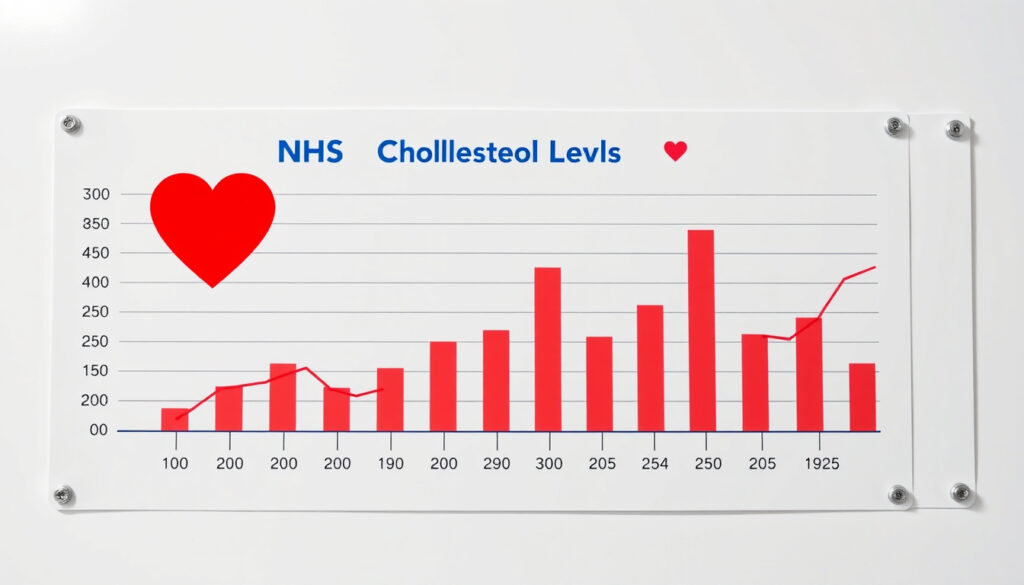
Cholesterol Levels by Age Chart UK: NHS mmol/L Guidelines
Most people in the UK have no idea where their cholesterol sits on the scale until a GP spells it out at a routine check. That number—measured in millimoles per litre (mmol/L)—carries more weight than most people realise, especially once you hit 40 and the numbers start climbing quietly. This guide lays out exactly what healthy cholesterol levels look like for different ages, what the NHS actually targets, and what steps most people can take to bring a high reading down.
Total cholesterol target: Below 5 mmol/L (NHS) · HDL “good” cholesterol: Above 1.0 mmol/L men / 1.2 mmol/L women (NHS) · Non-HDL cholesterol: Below 3.37 mmol/L (NHS)
Quick snapshot
- NHS recommends total cholesterol below 5 mmol/L for healthy adults (NHS cholesterol guidelines)
- HDL target above 1.0 mmol/L for men, 1.2 mmol/L for women (NHS cholesterol guidelines)
- Exact statin eligibility thresholds vary by individual cardiovascular risk profile
- Individual response to dietary changes differs significantly
- Cholesterol levels rise gradually from childhood through middle age (Repose Healthcare cholesterol data)
- Peak levels typically recorded in the 40-59 age group (Repose Healthcare cholesterol data)
- Adults aged 40-74 in England qualify for free NHS Health Check including cholesterol test (NHS cardiovascular risk tool)
- QRISK3 calculator used by GPs to assess 10-year cardiovascular risk (NHS cardiovascular risk tool)
| Measure | Target | Source |
|---|---|---|
| NHS Total Cholesterol | Below 5 mmol/L | NHS cholesterol guidelines |
| HDL Men | Above 1.0 mmol/L | NHS cholesterol guidelines |
| HDL Women | Above 1.2 mmol/L | NHS cholesterol guidelines |
| Non-HDL Target | Below 3.37 mmol/L | NHS cholesterol guidelines |
| LDL Cholesterol | Below 3.0 mmol/L | Repose Healthcare age chart |
| Triglycerides (fasting) | Below 1.7 mmol/L | Lola Health UK chart |
What should a 60 year old’s cholesterol be?
Cholesterol targets do not change simply because you are older—the NHS sets the same benchmarks for a 60-year-old as for a 40-year-old. Total cholesterol should still sit below 5 mmol/L, and non-HDL (the “bad” cholesterol that matters most for heart health) should stay below 3.37 mmol/L (NHS cholesterol guidelines). What does shift is the likelihood that you will need medication to hit those numbers.
Cholesterol targets for 60+
- Total cholesterol: below 5 mmol/L
- Non-HDL cholesterol: below 3.37 mmol/L
- HDL cholesterol: above 1.0 mmol/L (men) or 1.2 mmol/L (women)
- LDL cholesterol: below 3.0 mmol/L for healthy adults
According to health charity data, women’s LDL cholesterol climbs roughly 40% from 2.43 mmol/L in the 18-29 age group to 3.40 mmol/L by age 60 and above (Forth With Life UK statistics). This is not a sign of inevitability—it is a signal that monitoring and lifestyle adjustments become more important, not less.
The NHS QRISK3 calculator that GPs use factors in age alongside cholesterol, blood pressure, and family history to estimate a 10-year cardiovascular risk score. For patients over 60, even a “borderline” cholesterol reading often tips into the range where statin treatment makes clinical sense.
Age-specific risks
The British Heart Foundation clarifies that healthy HDL cholesterol should be above 1.0 mmol/L for men and above 1.2 mmol/L for women (BHF cholesterol guidance). For people in their 60s, HDL tends to decline naturally, which makes lifestyle interventions particularly valuable—regular aerobic activity, for instance, is one of the most reliable ways to raise HDL in older adults.
The implication: a 60-year-old whose total cholesterol reads 5.5 mmol/L is technically above the NHS target, but whether that warrants a statin depends on overall risk profile, not the number alone.
For 60+ adults, NHS targets stay the same but medication becomes more likely—GPs use QRISK3 to weigh individual risk, and HDL naturally declines, making exercise and diet changes especially valuable at this age.
Do I need statins if my cholesterol is 6?
A total cholesterol of 6 mmol/L sits above the NHS recommended ceiling of 5 mmol/L, which means it warrants a conversation with your GP—but it does not automatically mean a prescription (NHS cholesterol guidelines). Cholesterol is only one piece of the puzzle that GPs use to make treatment decisions.
When statins are recommended
According to NHS guidance, statins are considered when total cholesterol exceeds 5 mmol/L in the presence of other cardiovascular risk factors, such as high blood pressure, smoking, obesity, or a family history of heart disease. The QRISK3 score—used by GPs across the UK—estimates 10-year cardiovascular risk using a combination of age, cholesterol ratio, blood pressure, and other variables (NHS cholesterol guidelines).
Heart UK notes that for primary prevention, national guidelines recommend reducing non-HDL cholesterol by more than 40% from baseline (Heart UK treatment thresholds). This means someone with non-HDL at 5 mmol/L would need to bring it below 3 mmol/L—requiring medication if diet and exercise alone are insufficient.
Factors beyond total cholesterol
Your GP will look at the full lipid profile, not just the total. Non-HDL cholesterol—calculated by subtracting HDL from total cholesterol—is considered a better predictor of cardiovascular events than total cholesterol alone, according to Heart UK guidance (Heart UK clinical data). A person with total cholesterol at 6 but non-HDL at 3.5 may present differently than someone with total cholesterol at 6 and non-HDL at 5.
What this means: a cholesterol reading of 6 on its own should prompt a GP appointment within weeks, not a panic. Ask for the full lipid breakdown and your QRISK3 score before agreeing to any medication.
Cholesterol of 6 warrants a GP appointment, but total cholesterol alone rarely triggers statins—GPs weigh QRISK3 scores, non-HDL readings, and individual risk factors before recommending medication.
Is 5.5 cholesterol very high?
A total cholesterol of 5.5 mmol/L is above the NHS recommended maximum of 5 mmol/L, placing it in the “borderline high” category. The NHS notes that total cholesterol above 5.0 mmol/L is considered high for UK adults (NHS cholesterol guidelines). That said, context matters enormously.
Interpreting 5.5 mmol/L
A reading of 5.5 mmol/L sits roughly 10% above the NHS target threshold. For many people, this can be managed with dietary changes and increased physical activity before any medication is considered. The critical question your GP will ask is: what is the non-HDL figure? If non-HDL sits below 3.37 mmol/L, the risk profile may still be acceptable.
- 5.5 mmol/L = borderline high (10% above NHS target)
- Non-HDL below 3.37 mmol/L = within acceptable range
- LDL below 3.0 mmol/L = target achieved
5.7 mmol/L and similar levels
Moving from 5.5 to 5.7 mmol/L represents a modest numerical difference, but it shifts the conversation with your GP. At this level, NHS guidance increasingly leans toward considering lifestyle intervention and potentially statin therapy, especially if other risk factors are present. Heart UK recommends non-HDL below 4.0 mmol/L and LDL below 3.0 mmol/L as meaningful clinical targets, meaning a 5.7 total requires substantial reduction in the non-HDL component to hit guideline targets (Heart UK treatment targets).
The implication: crossing from 5.5 to 5.7 is not a dramatic jump, but it moves you further from target and closer to the threshold where statin consideration becomes more likely. The sooner action is taken, the more manageable the reduction tends to be.
At 5.5 mmol/L, you are in borderline-high territory—diet and exercise can often bring numbers down, but crossing above 5.7 triggers more serious GP discussions about statins and tighter targets.
How can I lower my cholesterol from 6 to 4?
Dropping total cholesterol from 6 to 4 mmol/L is an ambitious but achievable goal for many adults. Research-backed strategies include dietary changes, regular exercise, weight management, and in some cases, supplements or medication. The timeframe varies—most evidence suggests meaningful improvement within 3-6 months of consistent lifestyle change.
Reducing total cholesterol by a third (from 6 to 4 mmol/L) typically requires sustained effort across multiple areas simultaneously. One change alone is rarely sufficient for a drop of this magnitude.
Lifestyle changes
The most impactful modifications, according to health guidance, involve removing saturated fats, adding soluble fibre, and introducing regular aerobic activity. Walking 150 minutes per week at a brisk pace is enough to move the needle for most people.
- Reduce saturated fat: swap butter for olive oil, choose leaner proteins
- Add soluble fibre: oats, barley, beans, lentils, psyllium
- Aerobic exercise: at least 150 minutes per week of moderate activity
- Weight management: even 5-10% body weight reduction can improve lipid profiles
- Limit alcohol: excessive intake raises triglycerides and LDL
Diet tips
Plant sterols and stanols—found in fortified foods like spreads and yoghurts—can reduce LDL by around 10% when consumed consistently as part of a balanced diet. Oats contain beta-glucan, a soluble fibre that binds cholesterol in the gut and prevents reabsorption. Fatty fish such as mackerel, salmon, and sardines provide omega-3 fatty acids that help lower triglycerides.
The trade-off: dietary changes require ongoing commitment. Studies from health charities suggest that people who maintain these changes long-term see sustained improvements in their lipid profiles—short-term efforts tend to show only temporary benefits.
Cutting cholesterol from 6 to 4 requires attacking on multiple fronts—diet, exercise, weight management simultaneously—over 3-6 months of sustained effort rather than quick fixes.
What are the 5 worst foods for cholesterol?
Certain foods have a pronounced effect on cholesterol levels, typically by raising LDL, increasing triglycerides, or reducing HDL. According to health guidance, the worst offenders share a common feature: high saturated fat or trans fat content.
Foods to avoid
- Full-fat cheese: high in saturated fat, raises LDL directly
- Biscuits and pastries: often contain both saturated fat and added sugar
- Processed meats: sausages, bacon, and deli meats are linked to higher LDL
- Cream-based sauces: butter-based gravies and cream sauces add saturated fat quickly
- Coconut oil and palm oil: despite some marketing, these are high in saturated fat
The British Heart Foundation guidance identifies processed meats and full-fat dairy products as significant contributors to saturated fat intake in the typical UK diet. Switching to leaner cuts, reduced-fat dairy, and plant-based alternatives represents one of the most straightforward dietary improvements for cholesterol management.
UK-specific advice
Biscuits deserve a special mention in the UK context. A single chocolate digestive contains around 1.4g of saturated fat—roughly 7% of the daily recommended maximum. For someone already managing borderline cholesterol, regular biscuit consumption (two or three per day) can meaningfully raise saturated fat intake without providing compensatory nutritional benefit.
Are biscuits bad for cholesterol? Yes, in the sense that regular consumption adds saturated fat without meaningful fibre or protein. The answer is not necessarily to eliminate them entirely, but to treat them as an occasional treat rather than a daily staple.
The implication: UK dietary culture—tea with biscuits, pub lunches, Sunday roasts with rich gravies—can quietly push saturated fat intake above recommended levels. Awareness is the first step; substitution is the second.
The table below summarises the cholesterol impact of common culprits and healthier alternatives to consider.
| Food | Effect on cholesterol | Better alternative |
|---|---|---|
| Biscuits and pastries | Raises LDL, adds saturated fat | Oatcakes, plain digestives (limit) |
| Full-fat cheese | Raises LDL directly | Reduced-fat cheese, cottage cheese |
| Processed meats | Raises LDL, raises triglycerides | Chicken, fish, legumes |
| Butter and cream sauces | High saturated fat load | Olive oil, nut-based sauces |
| Coconut oil | High saturated fat (~82%) | Rapeseed oil, olive oil |
The implication: each row in the table represents a swap that reduces saturated fat load without requiring a complete dietary overhaul—small substitutions compound into meaningful cholesterol reductions over months.
The five worst cholesterol offenders—full-fat cheese, biscuits, processed meats, cream sauces, coconut oil—share high saturated fat content; swapping them for leaner proteins, oatcakes, and olive oil delivers measurable LDL improvements over 8-12 weeks.
Practical steps to check your cholesterol levels
Three concrete actions most UK adults can take within the next month to assess and address their cholesterol:
Book a free NHS Health Check if you are aged 40-74 and live in England—you are entitled to a cholesterol test as part of this assessment (NHS health check). Contact your GP surgery or local pharmacy to book.
Know your numbers—specifically ask for non-HDL cholesterol, not just total. The NHS target for non-HDL is below 3.37 mmol/L. Request a full lipid breakdown so you and your GP can make an informed decision.
Start with two swaps—replace butter with olive oil spread and add one portion of oats or legumes daily. Research suggests that consistent dietary changes can produce measurable improvements in lipid profiles within 8-12 weeks.
Confirmed
- NHS recommends total cholesterol below 5 mmol/L for healthy adults
- HDL above 1.0 mmol/L for men, 1.2 mmol/L for women
- Non-HDL target below 3.37 mmol/L
- Total cholesterol peaks in the 40-59 age group
- Free NHS Health Check available for adults aged 40-74 in England
- QRISK3 used by GPs to estimate cardiovascular risk
Unclear
- Exact statin threshold varies by individual risk profile and GP assessment
- How quickly dietary changes translate to measurable LDL reduction depends on individual metabolism
- Precise impact of stress and sleep on cholesterol levels not fully quantified in large-scale UK studies
Cholesterol levels should be below 5 mmol/L for healthy adults. If you are concerned about your cholesterol level, speak to your GP.
— NHS (UK’s National Health Service guidance)
For primary prevention, national guidelines recommend reducing non-HDL by more than 40% from baseline to achieve target levels.
— Heart UK (UK heart charity, cholesterol specialist)
Related reading: Perimenopause Symptoms by Age · Celebrity Weight Loss Transformations
Frequently asked questions
Do most 70 year olds have high cholesterol?
Cholesterol levels tend to rise with age, and a substantial proportion of adults in their 70s do have elevated total cholesterol. According to health data, up to 60% of UK adults have total cholesterol above 5.0 mmol/L, and this proportion increases significantly in older age groups. However, NHS targets apply regardless of age—meaning a 70-year-old should still aim for below 5 mmol/L total and below 3.37 mmol/L non-HDL.
How long does it take to lower cholesterol from 8 to 5?
A reduction from 8 to 5 mmol/L is substantial—roughly a 37.5% drop in total cholesterol. With dedicated lifestyle changes, most people see measurable improvement within 8-12 weeks. Reaching the NHS target of 5 mmol/L from 8 typically requires several months of consistent effort, and some individuals may need statin support to achieve and maintain this level. Your GP should review progress after 3 months of any new treatment approach.
How long does it take to lower cholesterol?
Most dietary changes produce measurable effects within 3-6 months. LDL cholesterol responds relatively quickly to dietary modifications—soluble fibre and plant sterols can produce noticeable changes within 4-8 weeks. Statins typically work faster, with significant LDL reduction measurable within 4-6 weeks of starting treatment.
Are biscuits bad for cholesterol?
Biscuits are not uniquely harmful, but they are a common source of saturated fat in the UK diet. A typical chocolate digestive contains around 1.4g saturated fat per biscuit. The NHS recommends limiting saturated fat to around 20g daily for men and 15g for women. Two or three biscuits daily can represent a meaningful portion of that limit without providing fibre, protein, or other nutritional benefit. Occasional consumption is fine; daily habitual consumption is not ideal for cholesterol management.
What are normal cholesterol levels for adults?
For UK adults, the NHS recommends total cholesterol below 5 mmol/L, HDL above 1.0 mmol/L (men) or 1.2 mmol/L (women), non-HDL below 3.37 mmol/L, LDL below 3.0 mmol/L, and triglycerides below 1.7 mmol/L (fasting). These targets apply to most healthy adults regardless of age.
What are healthy cholesterol levels by age in the UK?
NHS targets do not vary by age—the benchmarks for total, HDL, non-HDL, and LDL cholesterol remain the same for a 20-year-old and a 70-year-old. What changes is the likelihood of hitting those targets without medication, as cholesterol tends to rise through middle age. Children typically have lower total cholesterol (under 150 mg/dL or roughly 3.89 mmol/L), which rises gradually through adulthood.
What is a healthy total cholesterol level?
A healthy total cholesterol level for UK adults is below 5 mmol/L according to the NHS. However, total cholesterol alone does not tell the full story—non-HDL cholesterol (below 3.37 mmol/L) and HDL cholesterol (above 1.0 mmol/L for men, 1.2 mmol/L for women) provide a more complete picture of cardiovascular risk.
For UK adults navigating cholesterol, the path forward is straightforward: know your numbers, understand the NHS targets, and start with manageable dietary swaps. Whether you are 40 or 70, the principles are the same—keep saturated fat low, move regularly, and work with your GP to determine whether lifestyle changes are sufficient or whether statin support is appropriate for your individual risk profile.
More related posts
 Alphonso Davies: Injury, Transfer, and Salary Update 2025
 Alan Turing: His Life, Codebreaking, and Legacy in AI
 Rita Simons: Biography, Marriages, Daughter’s Deafness
 Ali Campbell: Why He Left UB40, Illness, and Marriages
 Sigourney Weaver: Biography, Height, Husband, and Current Projects
 Brandon Williams: Career, Crash Rumors, and Hull City Exit
 Fallon Sherrock: Health, Partner, Net Worth & Career Facts
 John Lithgow: Height, Harry Potter Role, Net Worth & More